Let me ask you a question: Do you like Insects? I assume most of you will reply NO! But if I ask, Do you like Butterflies? Now I again assume most of you will reply YES!!.
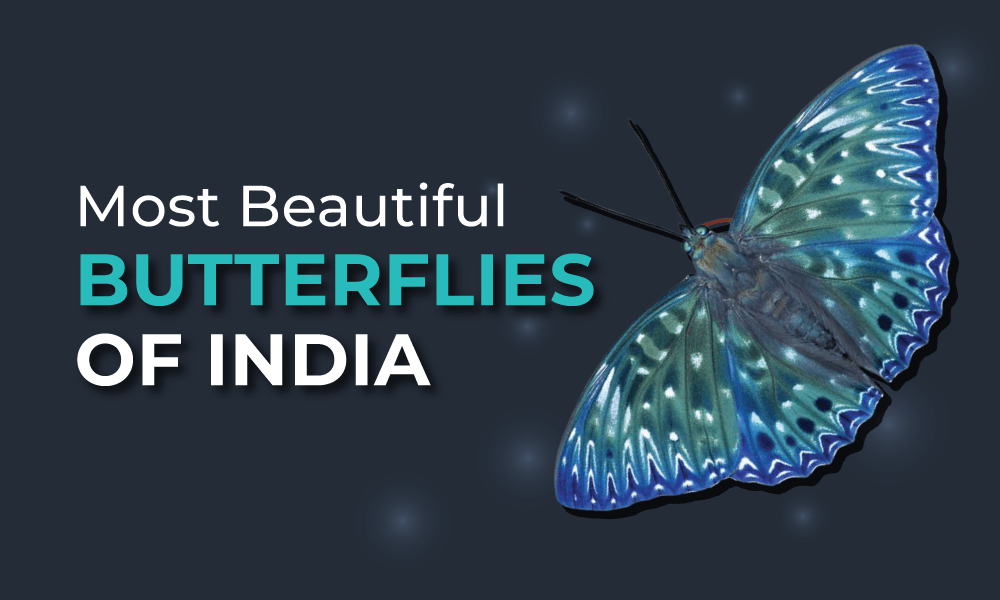
Butterflies are the most loved insects by everyone, and they come in all the colours of the rainbow. They are mostly found around flowers and just make us feel a little bit happier just by flying around us. There is definitely something magical about them.
You might have seen butterflies in many colours, and why not, because in India, we have around 1,500 species of butterflies. But to identify a butterfly, it begins with learning about six butterfly families. Those are Swallowtails (Papilionidae), Brush-footed (Nymphalidae), Whites and Yellows (Pieridae), Blues (Lycaenidae), Metalmarks (Riodinidae) and Skippers (Hesperiidae).
Let’s now see each of them separately.
Swallowtails (Papilionidae)
This family have some of the most beautiful butterflies. You must already have seen some of the common swallowtail butterflies, like the Common mormon or Lime swallowtail. Both of these butterflies can be very commonly found around the lemon and orange plants (citrus plants). That is the host plant of the Common Mormon or Lime Swallowtail.
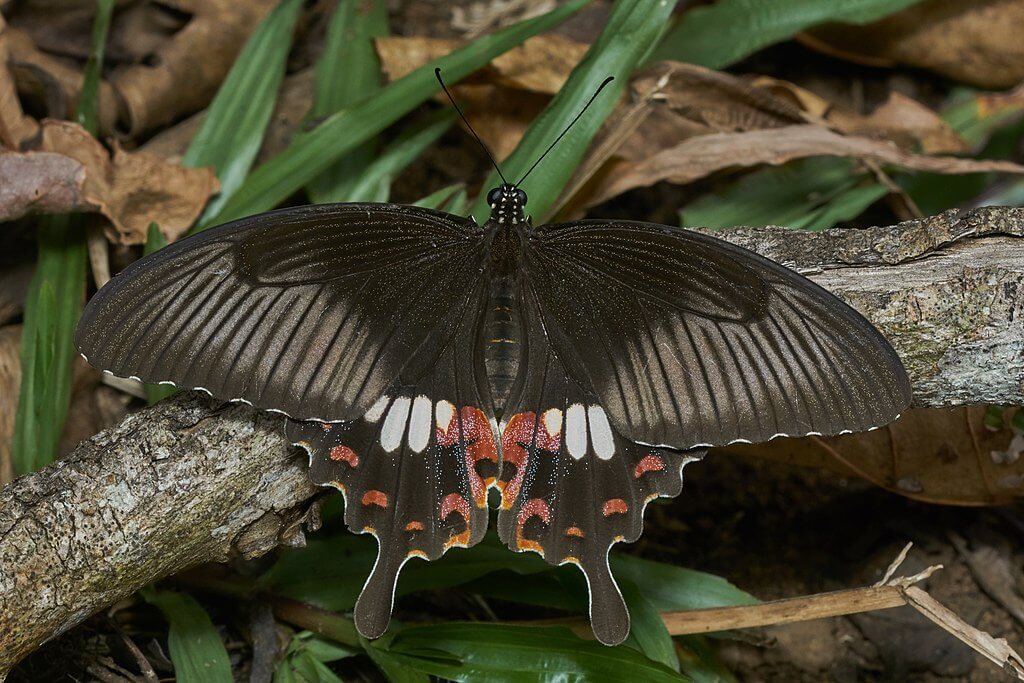
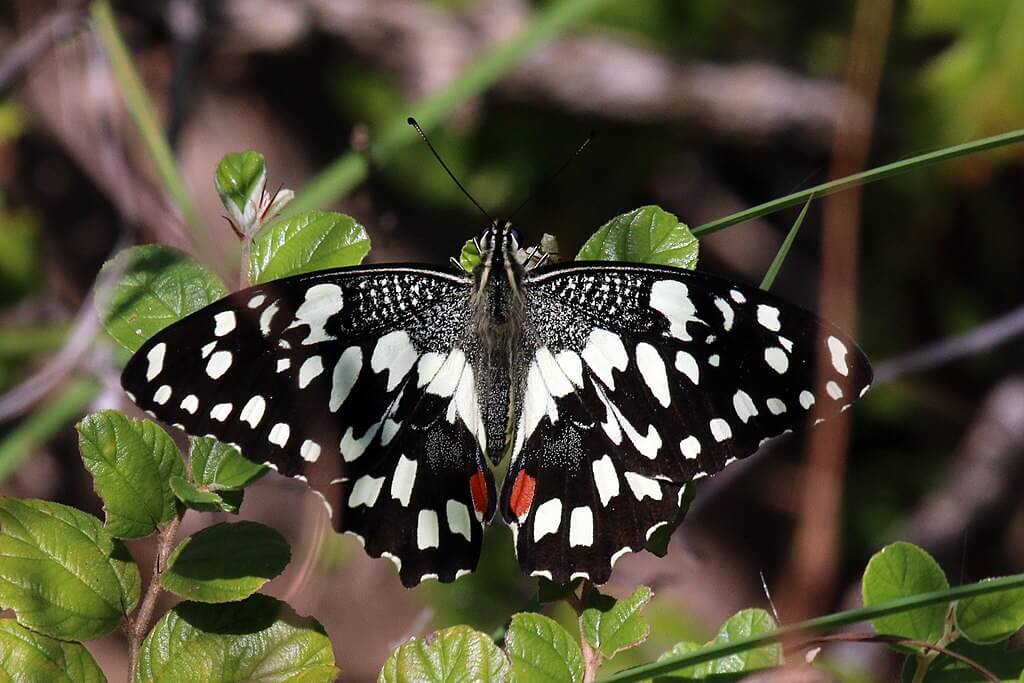
The name “swallotail” refers to the tail-like thing in the back of the wing of a butterfly. If you see a tail-like thing on its wing, then the chances are you are seeing a swallowtail butterfly.
Swallowtails are known for their tail-like extensions on the back of their wings, but some species are tailless. India is home to 77 species of swallowtail butterflies.
Brush-Footed (Nymphalidae)
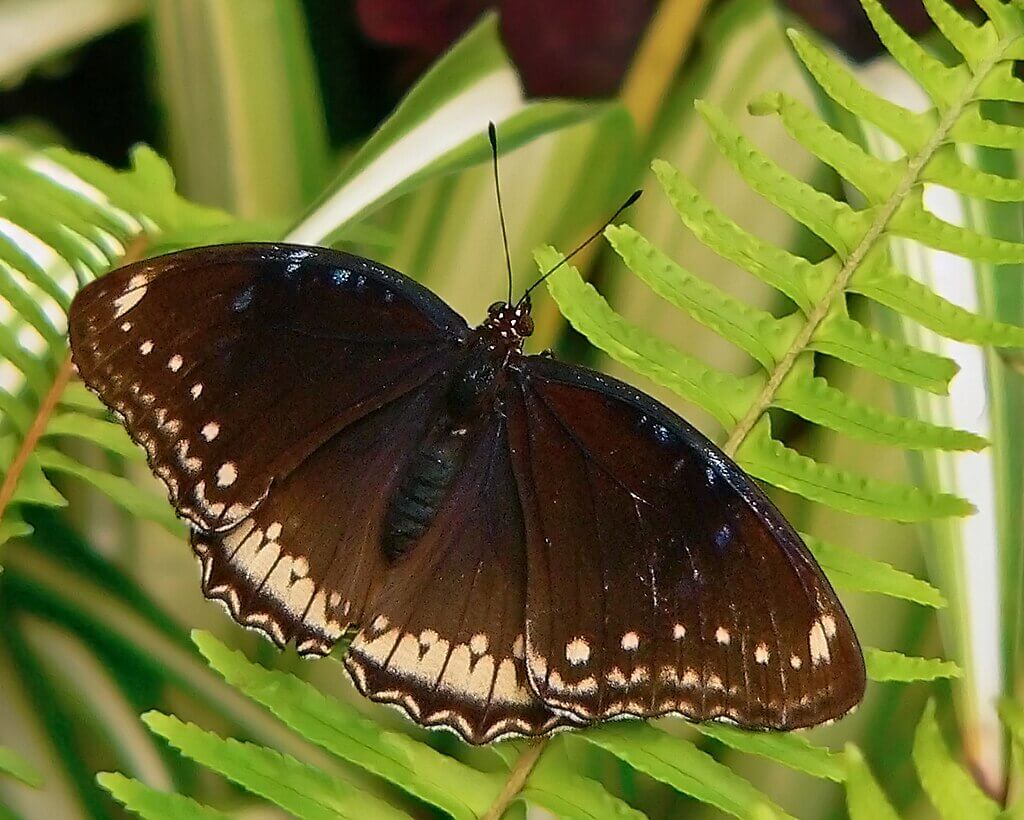
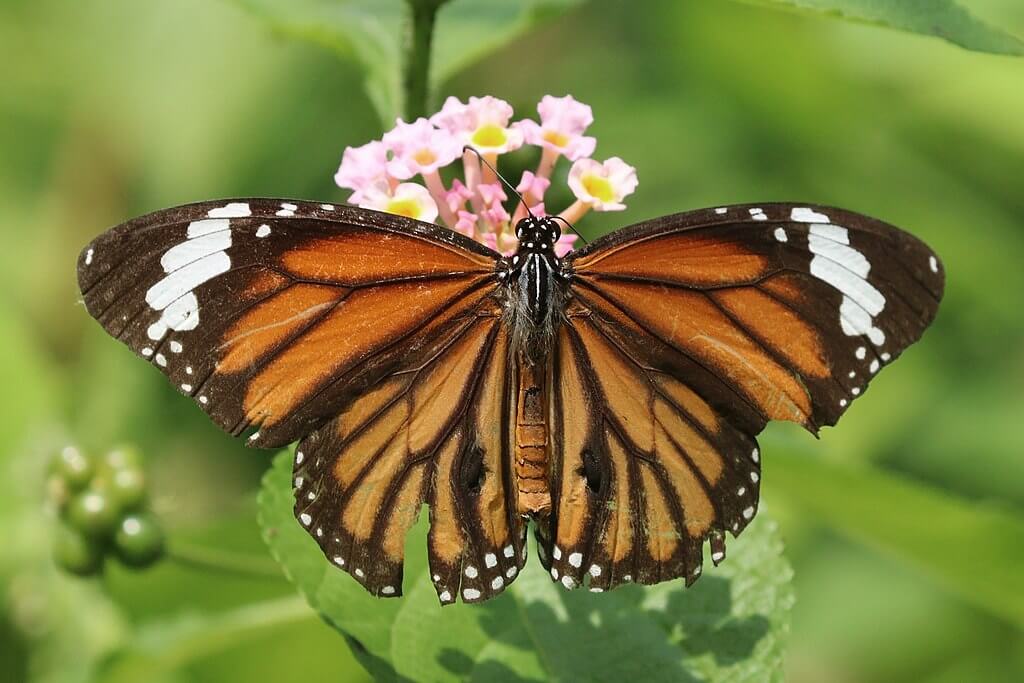
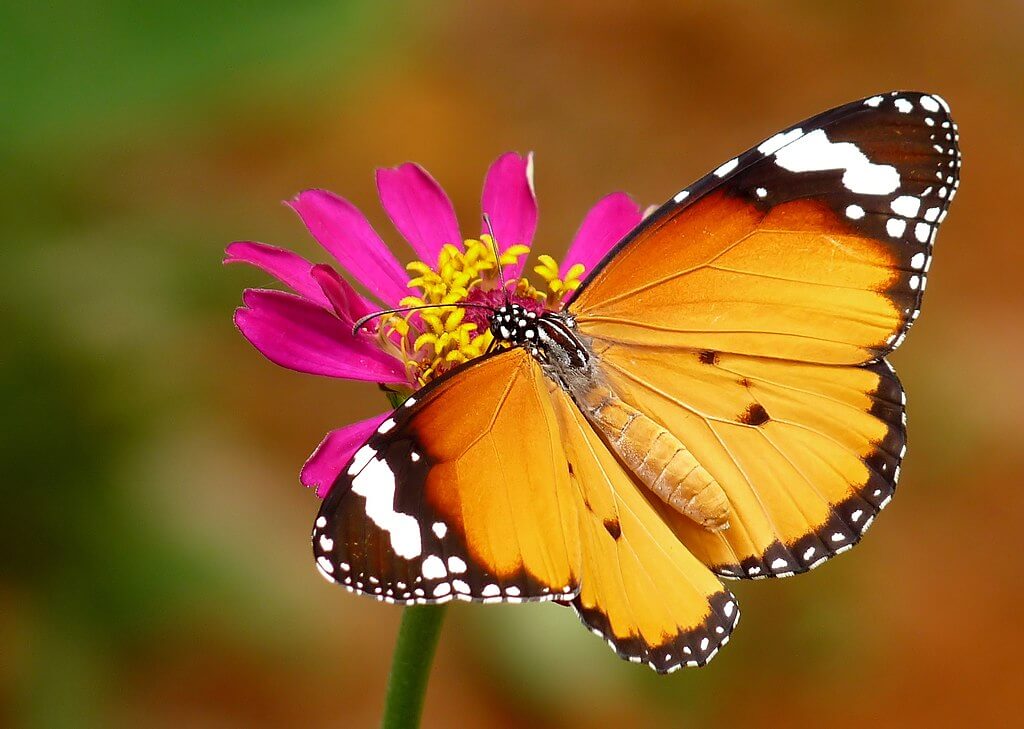
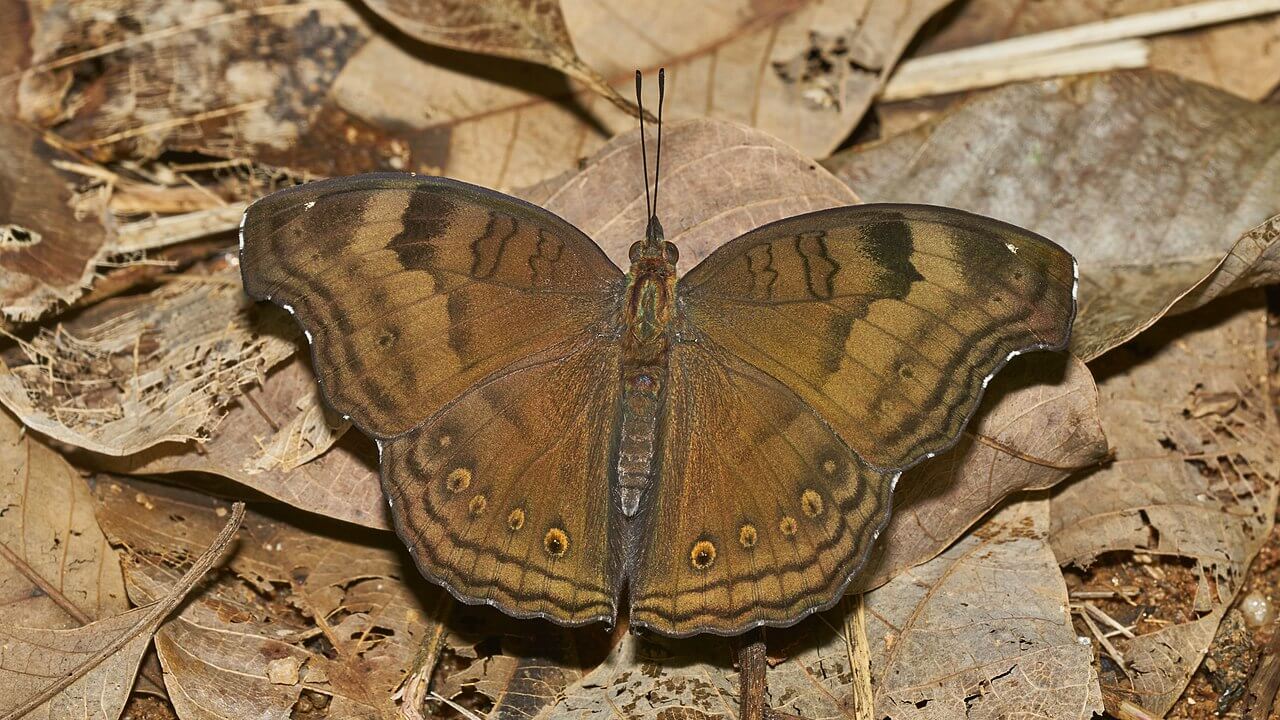
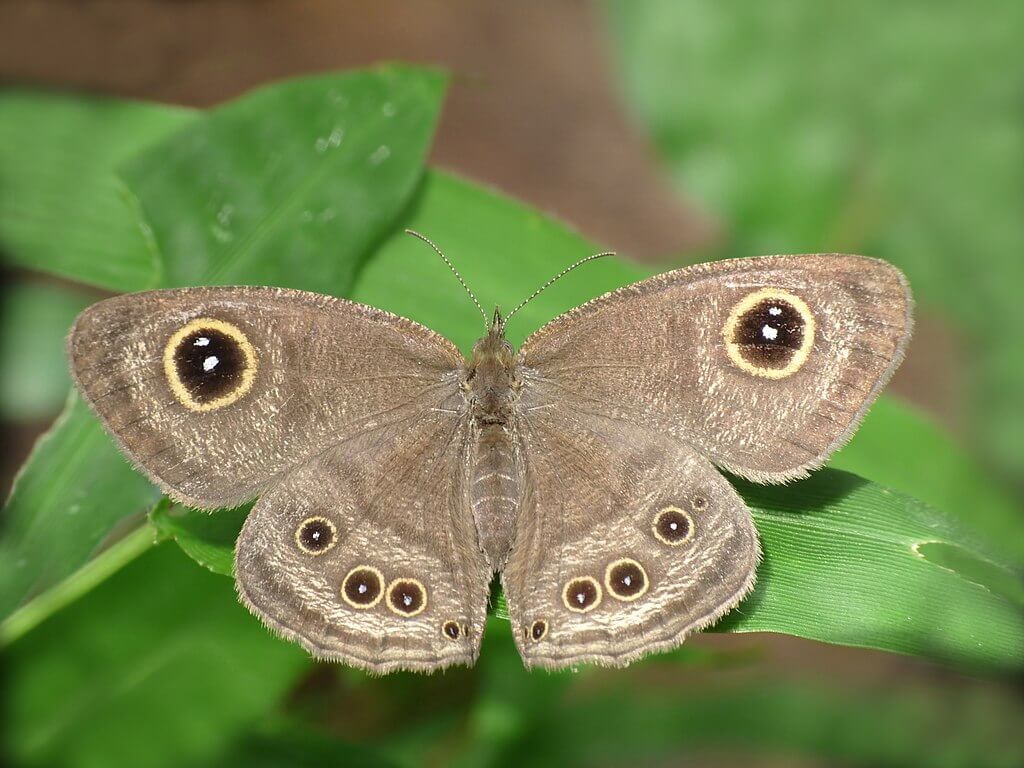
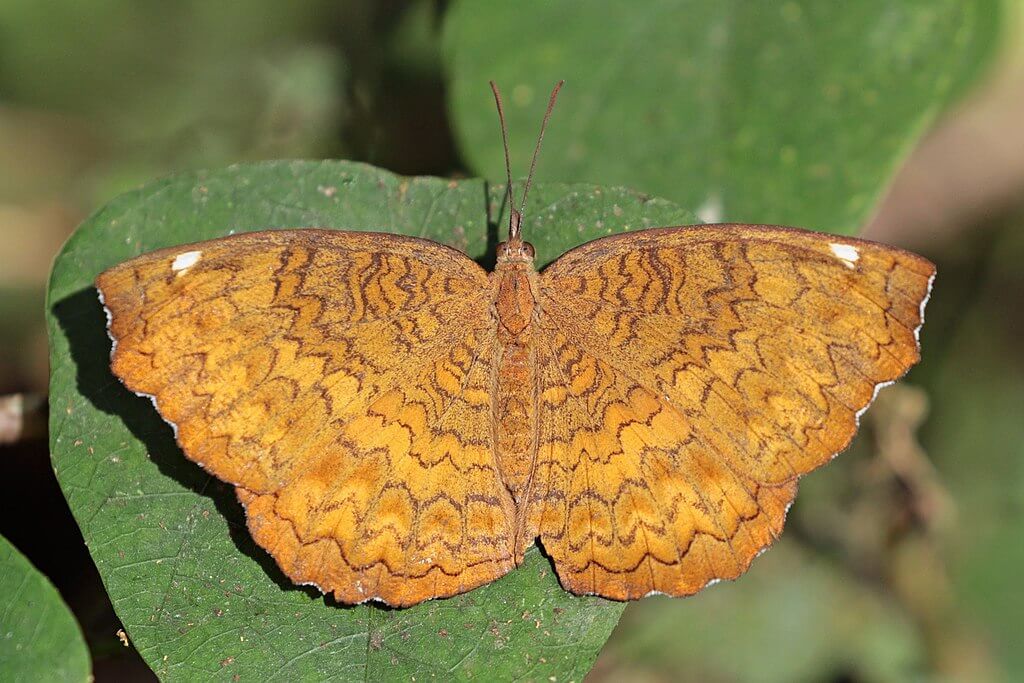
The brush-footed family is the largest family of butterflies. In India, 461 species have been recorded, making it one of the largest families. Butterflies have 3 pairs of legs. But most of the butterflies of this family appear to have just two pairs of legs, but take a closer look again, and you will see the first pair is still there, but reduced in size. Brush-footed butterflies use these small legs to taste their food.
Many of our common butterflies belong to this group, like the Common crow, Striped tiger, Plain tiger, Chocolate pansy, Common five-ring, and Common castor.
Whites and Yellows (Pieridae)
You might not know their names, but you’ve probably seen some of the white and yellow butterflies in your garden or park. Most species of this family have pale or yellow wings with black or orange markings.
They are small and very dull-looking.
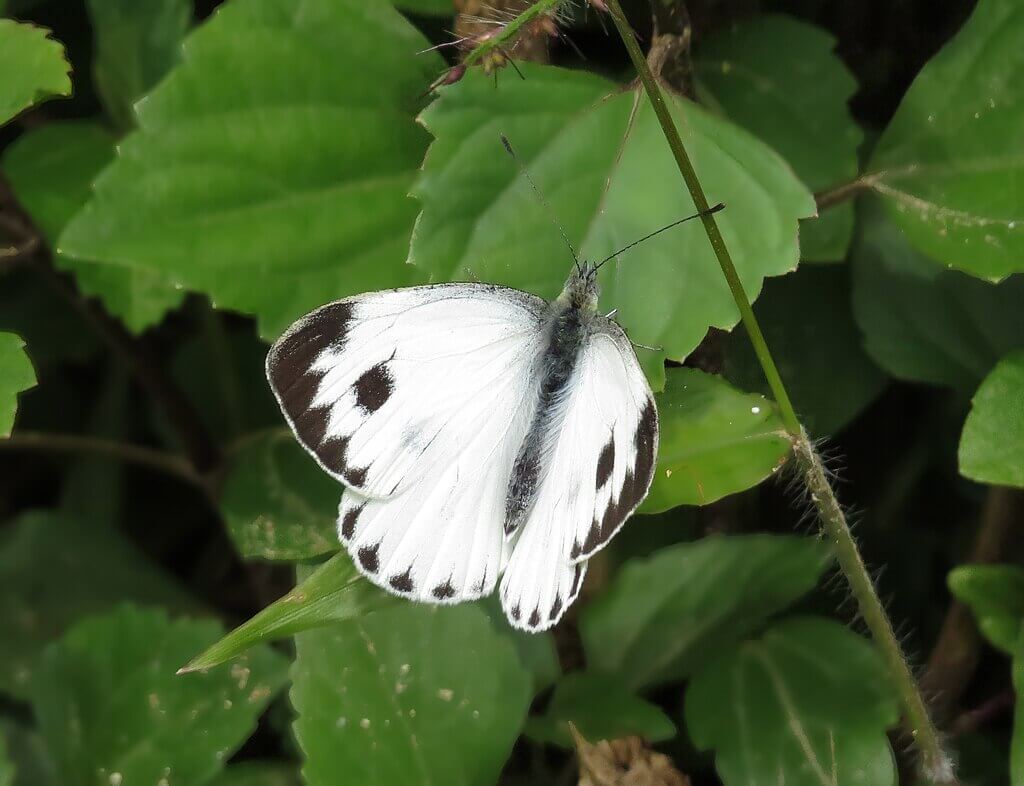
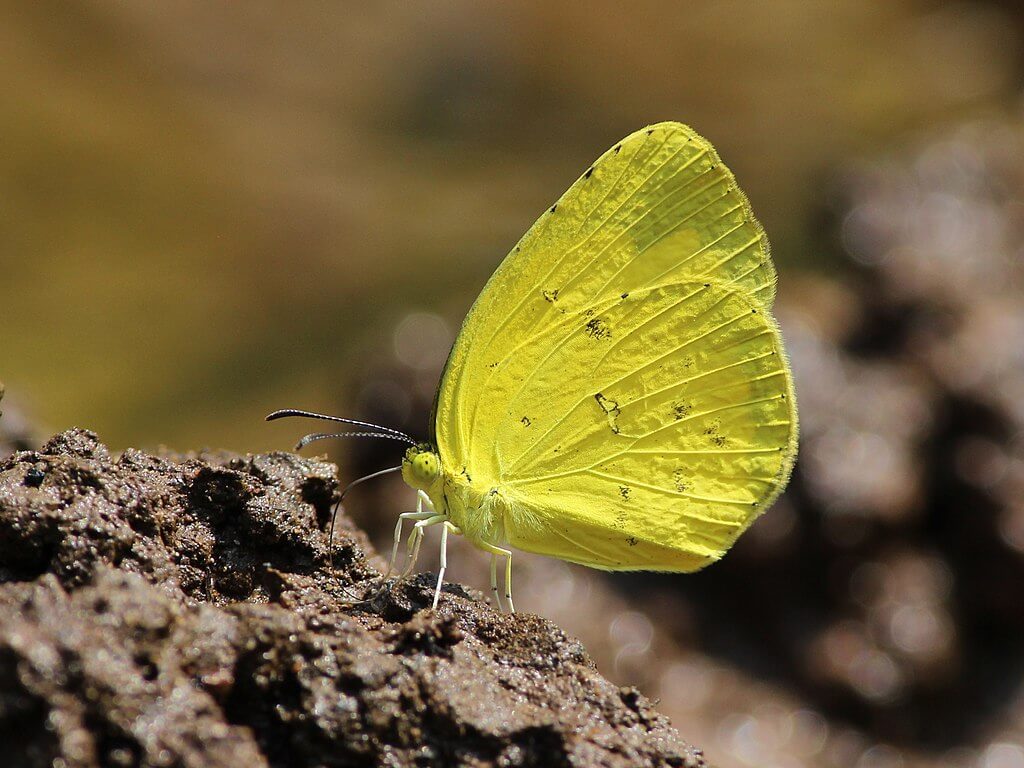
Most white and Yellow family butterflies have limited areas, living only where legumes or Brassicaceae (cabbage, radish, Mustard or cauliflowers) plants grow. The cabbage white and common grass yellow is much more widespread and probably the most familiar members of the group. There are 81 species of white and yellow families in India.
Blues (Lycaenidae)
Butterfly identification gets really trickier with the family of Blues. Most of these are very small, and blue, and, in my personal experience, very fast!. These fast and furious are very difficult to take photographs of or even take a closer look at.
If the butterfly wings are open and you are seeing a sparkly blue colour, and if the wings are closed, and it is white and pale, then bingo, it’s a Blues. The underside of the wing is dull in colour, like white or brown, but the upper side of the wing is very flashy blue that can easily be seen.
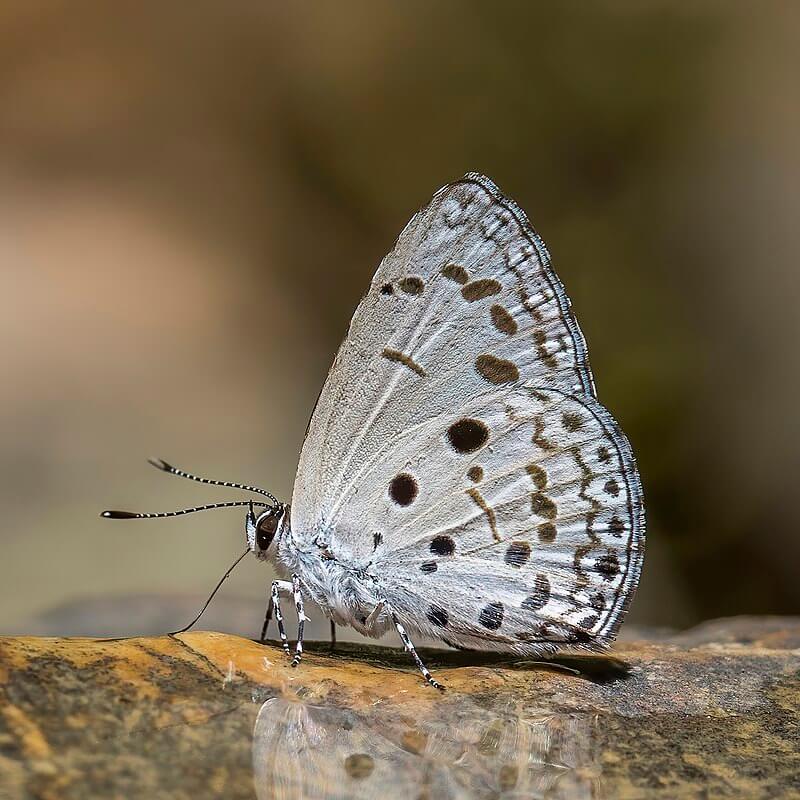
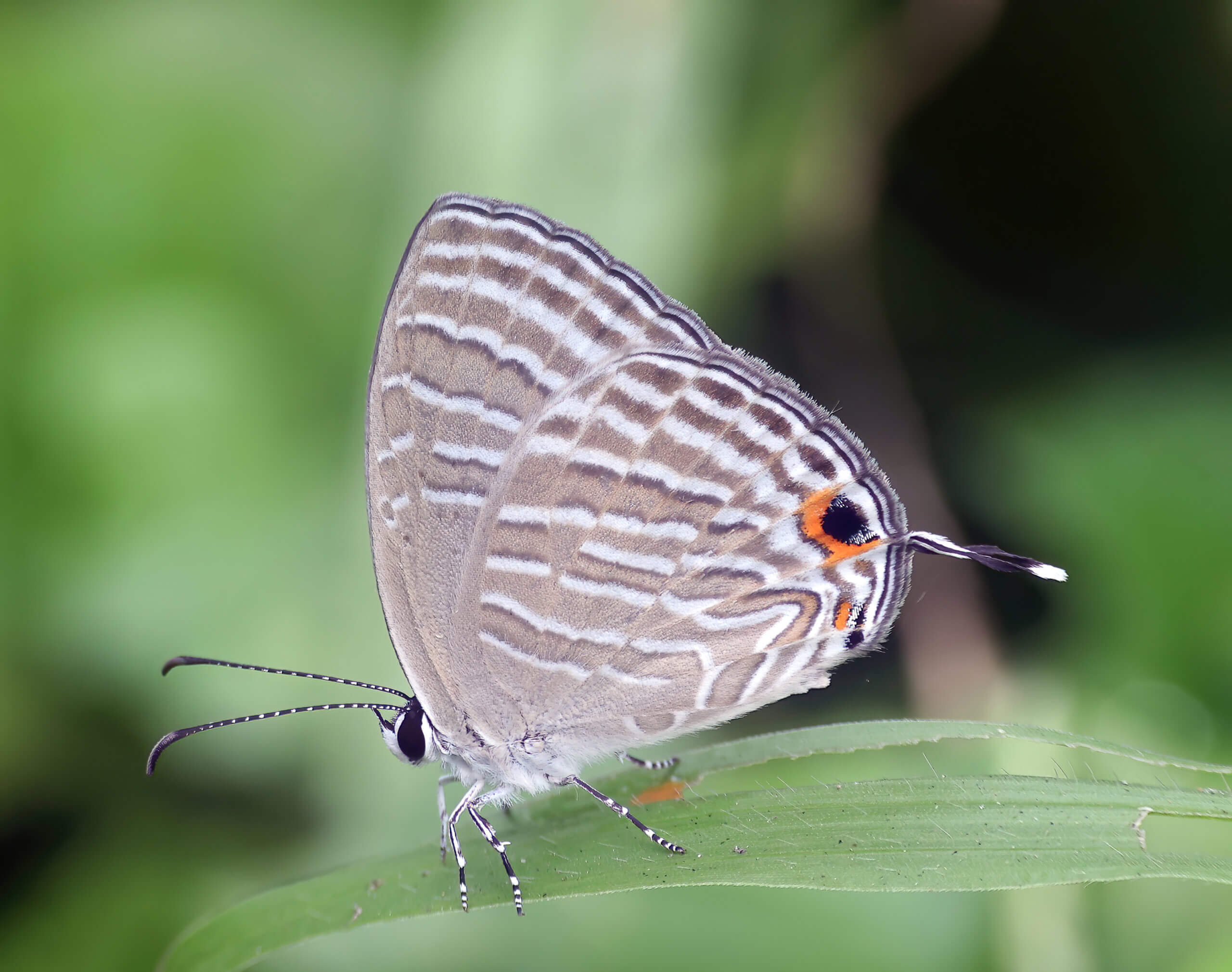
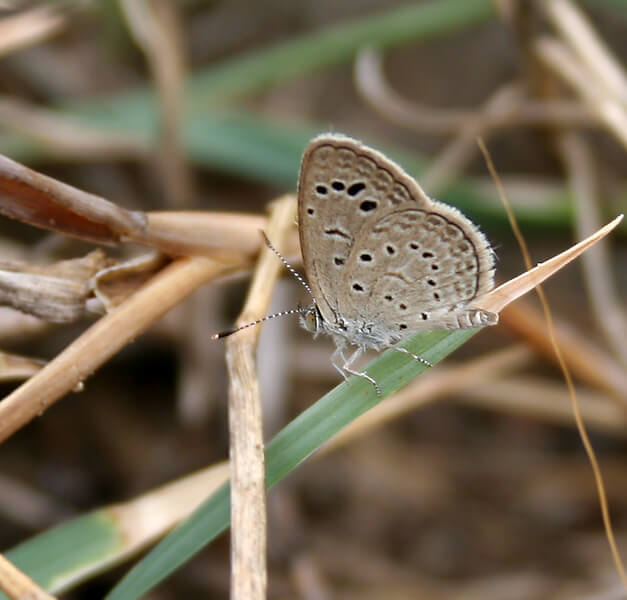
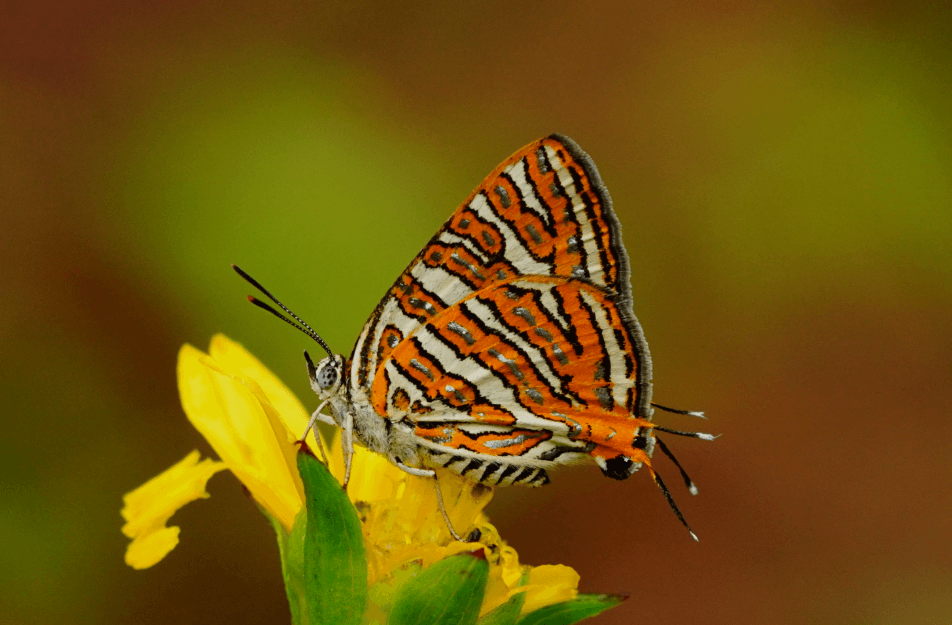
Some of the most common butterflies of this group are the Common hedge blue, Common Cerulean, Grass blue or silverline.
India has approximately 438 to 450 species of butterflies belonging to the Lycaenidae family. This would make it the second largest family of butterflies, roughly 30% of the total butterfly diversity in India.
Metalmarks (Riodinidae)
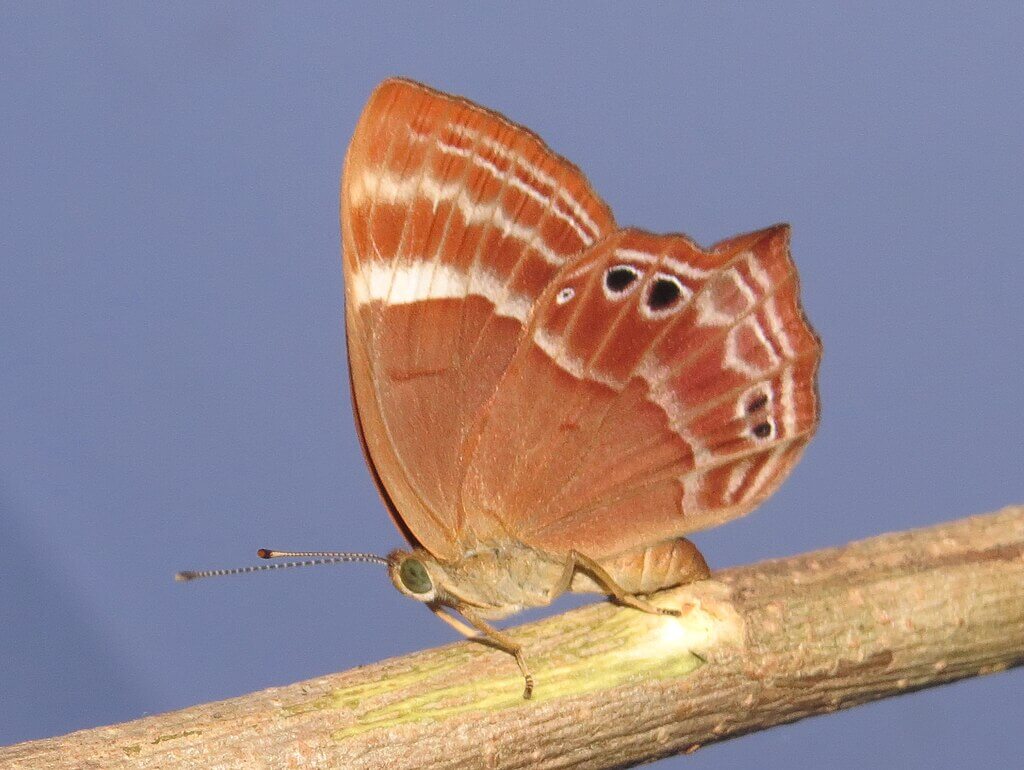
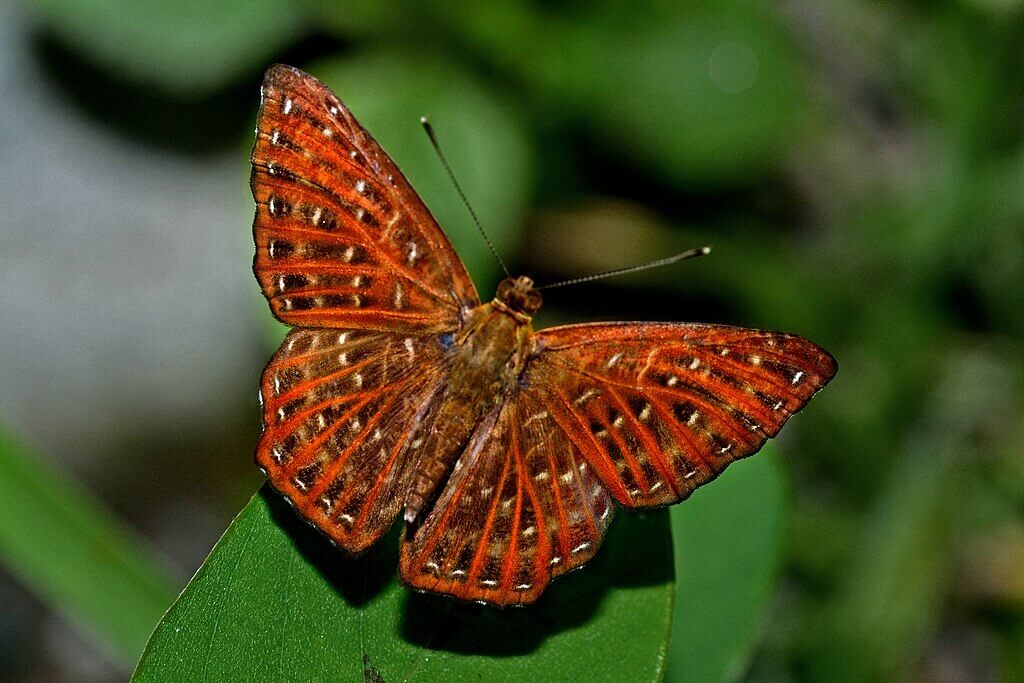
In India, there are 16 species of butterflies belonging to the Metalmarks family. These are also called Punches and Judies. The family is known for its distinctive bright, metallic spots on the wings. Double-banded Judy and Punchinello are the most common metalmark butterflies found in India.
Skippers (Hesperiidae)
Skippers are very easy to differentiate from other butterflies. If we compare them to the other groups, like swallowtail and brush-footed, these skippers are very dull and moth-like. Skippers also have different antennae from other butterflies. Unlike the “clubbed” antennae of butterflies, these skippers’ antennae have a “hook” in the end. Their wing shape is also not like our regular butterfly, but very much like moths.
Their name “skippers” describes their movement, a quick skipping flight from flower to flower. They are very dull in colour, but their flight is what makes them unique in their own way. Most of them are grey, brown, or yellow with black markings.
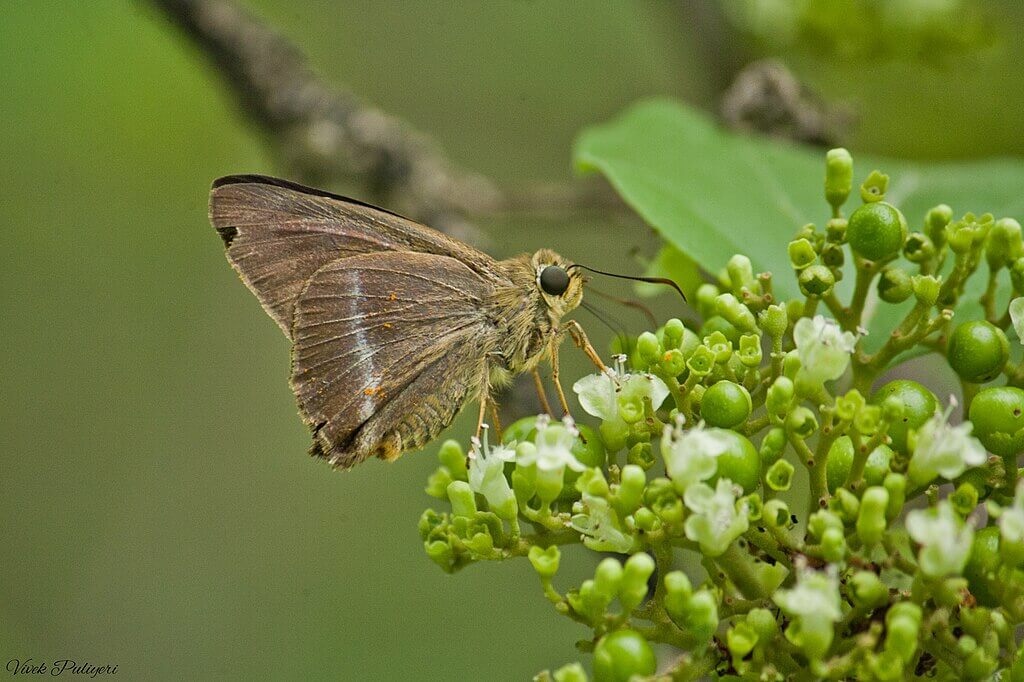
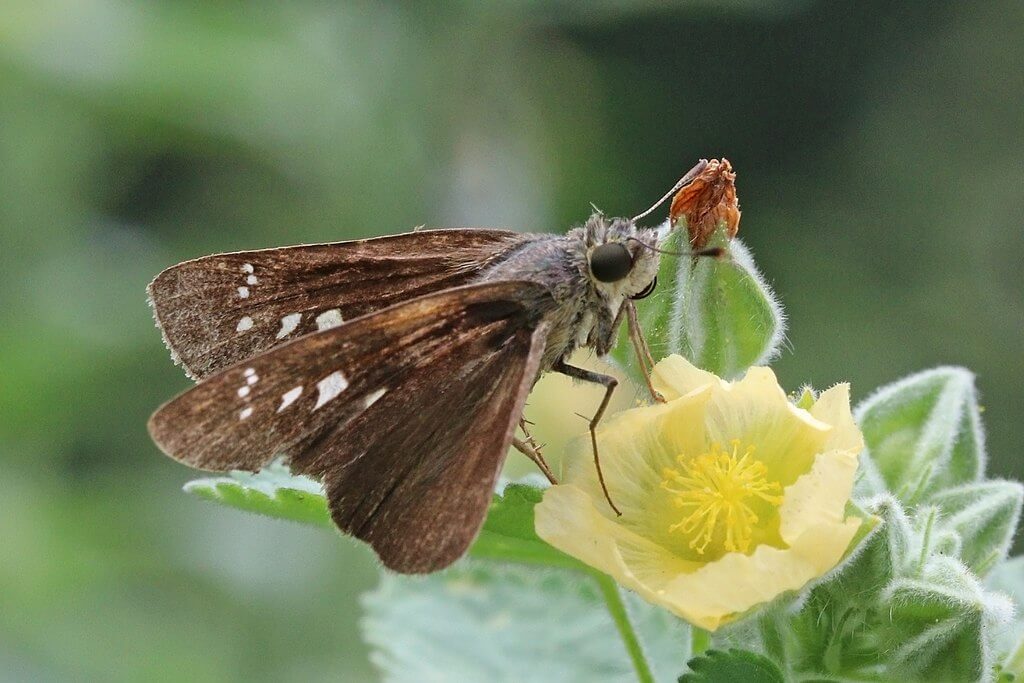
Some of the common members of this family are the Common banded owl, Blank swift or common branded redeye. There are approximately 320 species of Skippers found in India. This family represents about 21% of the Indian butterfly fauna. They are the third-largest family of butterflies in India.