When we think of meat-eating animals, we often picture lions or tigers. But there are many other carnivores too, including wild dogs and even some plants. In India, there are 5 kinds of wild canids —
- Wolfs – Indian Wolf and Himalayan Wolf
- Fox – Indian Fox, Tibetan Fox and Red Fox
- Golden Jackal
- Dhole
- Striped Hyenas
Which are close relatives. They all live in many different places, like forests, grasslands, and deserts, but people don’t know much about them or how important they are for nature. Because they can survive in so many habitats, they could help us learn more about these landscapes. Right now, there isn’t a clear system to study or protect them, but if we use local knowledge and citizen science, more people can join in to understand and care for these animals.
1. The Indian Wolf (भेड़िया)
The Indian Wolf is a very common type of wolf that is found across India, mostly in forests, scrublands, and dry grasslands. They live in small groups of up to eight. Because they sometimes attack livestock, people often hunt them, which leads to conflict. Their homes are broken up, and wild prey is harder to find, so they end up coming close to humans more often.
The Indian wolf is distributed across the states of Gujarat, Rajasthan, Haryana, Uttar Pradesh, Madhya Pradesh, Jharkhand, Maharashtra, Karnataka, Kerala and Andhra Pradesh. Mahuadanr Wolf Sanctuary in the state of Jharkhand is the only wolf sanctuary in the country.
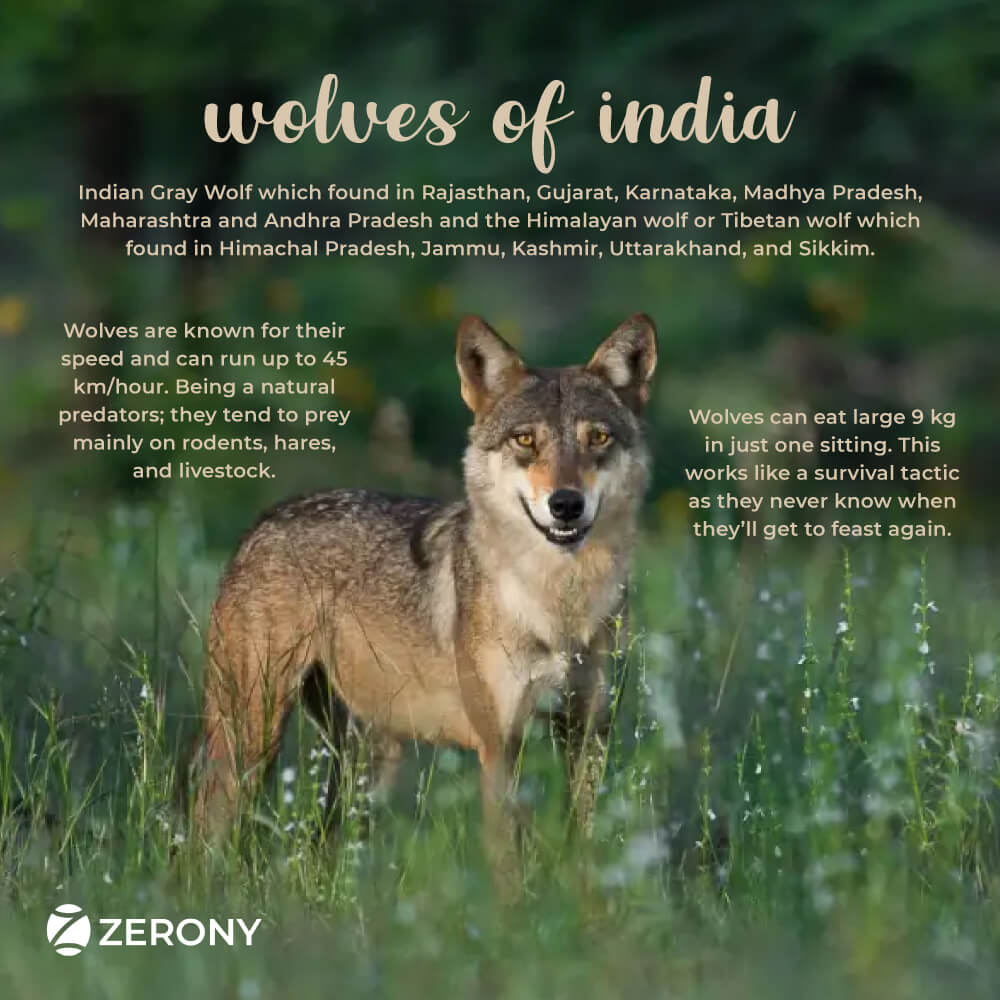
Overall, over 100,000 wolves were killed for bounties in British India between 1871 and 1916. In today’s India, the Indian wolf population has fallen to between 2,000 and 3,100 individuals. They are considered endangered and are listed under Schedule I of India’s Wildlife Protection Act, 1972, which provides them with the highest level of protection.
In India, the Indian wolf is known by several names, including Bheriya, Hundar, and Nekral in Hindi, as well as Landga in Marathi and Bhagad in Kutchhi and Tholla in Kannada.
2. The Himalayan Wolf
Himalayan Wolf is a kind of Wolf found in the Himalayan regions, often living in alpine meadows, forests, and dry open areas. Himalayan Wolf lives in high places like Ladakh, the Tibetan Plateau, and the mountains of Central Asia. They are usually found above 4,000 meters (13,000 feet), where the air has very little oxygen. Unlike other wolves that live at lower heights, this wolf has adapted to survive in such thin air.
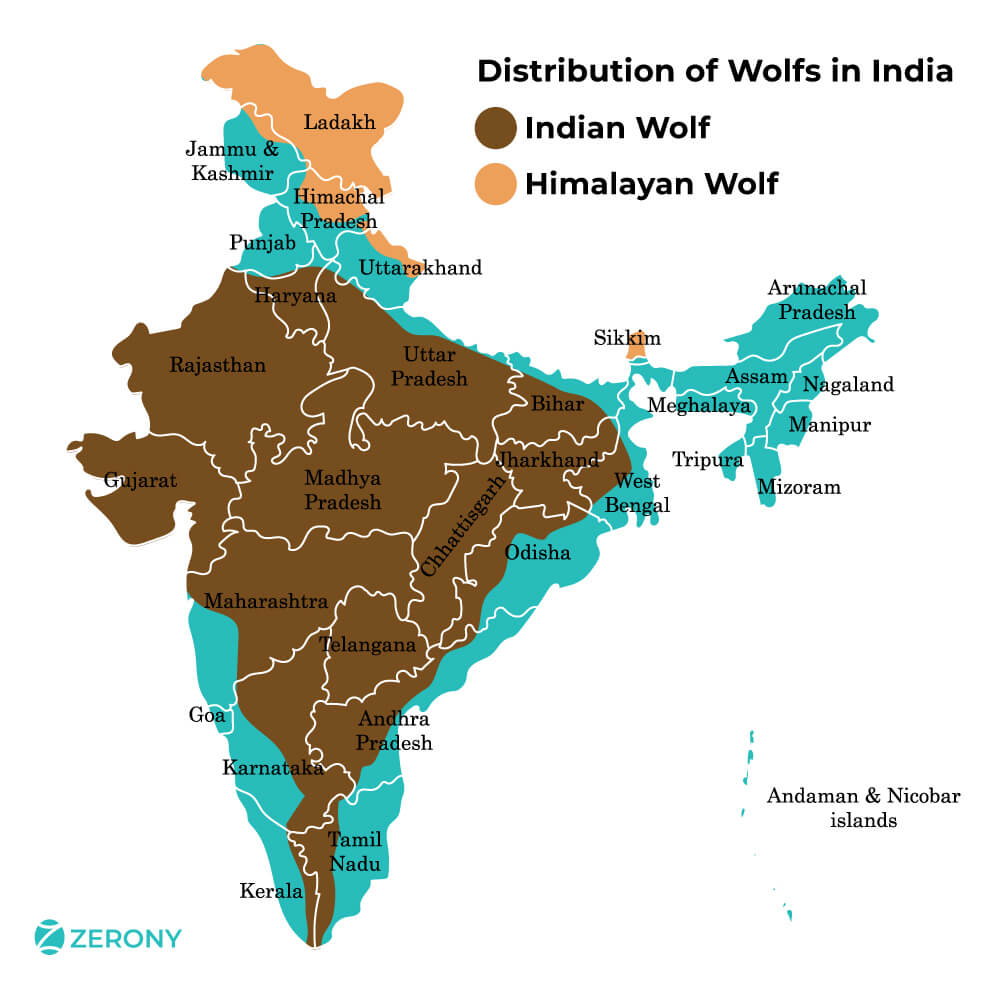
Because they move around a lot, they often come near villages and livestock, which leads to conflict with people. Himalayan wolves are also hunted for their fur and various body parts, which are then traded on the black market. And because of all this, Their Population in India is estimated to fall between 227 and 378 mature individuals, mainly found in Ladakh and the Spiti Valley of Himachal Pradesh. In Ladakh, the Himalayan wolf is called Shanku or Shangku. They are also present in smaller numbers in Uttarakhand and Sikkim.
The total global population of Himalayan wolves is estimated to be between 2,275 and 3,792 mature individuals. They are classified as “Vulnerable” on the IUCN Red List due to habitat loss and other threats.
3. The Indian Fox (लोमड़ी)
Indian Fox or Bengal Fox is found throughout the Indian subcontinent, except in the coastal regions and in the Himalayas. They are usually seen near agricultural areas and human settlements. Although the Indian Fox is known to be distributed throughout the subcontinent, its occurrence is based on factors such as the availability of prey. They have long, bushy tails with black tips. They are opportunistic feeders and feed on insects as well as small mammals.
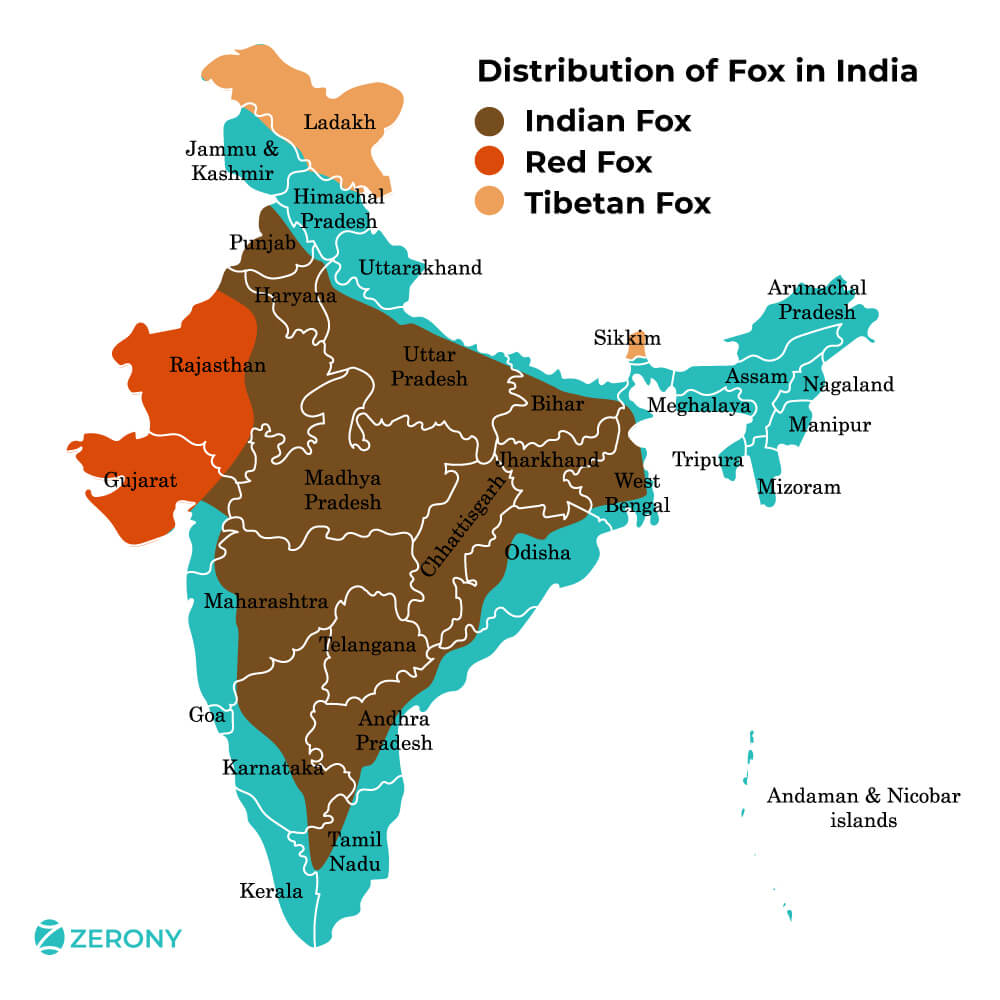
India Fox is an endemic species, which means they found nowhere else in the world.
4. The Red Fox
Red Fox is a very adaptable animal that can live in many places, from forests and deserts to mountains and even near people. They eat a wide variety of food—rodents, birds, fruits, vegetables, and even scraps of human waste. In cold, high-altitude areas, their bushy tail helps keep them warm by acting like a blanket. Because of their clever survival skills, they are often unfairly labelled as “cunning.” Sadly, they face threats from hunting and conflicts with domestic or free-ranging dogs.
5. The Tibetan Fox
Tibetan Fox lives in the open steppes and semi-deserts of the Tibetan Plateau, and in India, it is found in Ladakh and Sikkim, as well as parts of Nepal.
These small foxes have narrow muzzles, thick fur, and bushy tails. Unlike other fox species, they usually avoid human areas and prefer high plains and elevated regions. Their main food is the Plateau Pika, but they also hunt other small mammals and sometimes feed on livestock carcasses.
6. The Golden Jackal (सियार)
Golden Jackal lives across most of India, except in the high Himalayas. They do well even in areas changed by humans and are often seen near villages and towns. Though related to wolves, they look different—their coats are lighter, their bodies smaller, and their faces shorter. Golden Jackals eat whatever they can find, from small animals to leftovers and even garbage near human homes.
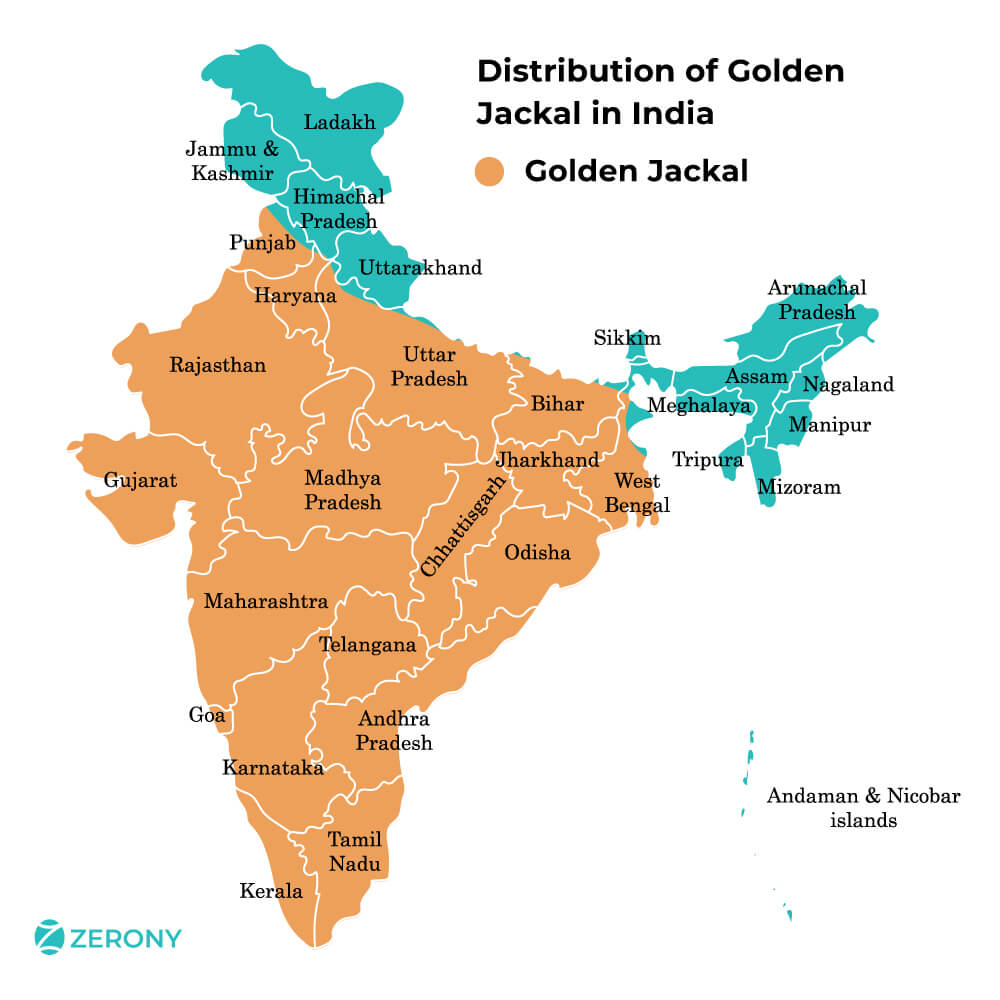
In India, the Golden Jackal is known by several local names. In Hindi, it’s called Siyar or Kakad; in Marathi, Kolha or Sake; in Telugu, Nakka; in Bengali, Kamṭhala; and in Kannada, Nari. Additionally, jackals expelled from their packs, forming a commensal relationship with tigers, are referred to as kol-bahl, bhálú (in southern India), phéall, phao, pheeow, or phnew (in Bengal), and ghog in other regions.
7. The Dhole (ढोल)
Dhole, also called the Asiatic Wild Dog, is an endangered animal found mainly in forests. They are known to have about 64 native names in 38 languages, which explains their habitat range. Dholes live in groups called packs, usually with six to eight members, though sometimes up to 20 before splitting into smaller groups. Young pups often play-fight, which helps them build strong bonds within the pack. Unlike some other canids, dholes rely almost entirely on hunting meat and cannot survive well outside forest habitats.
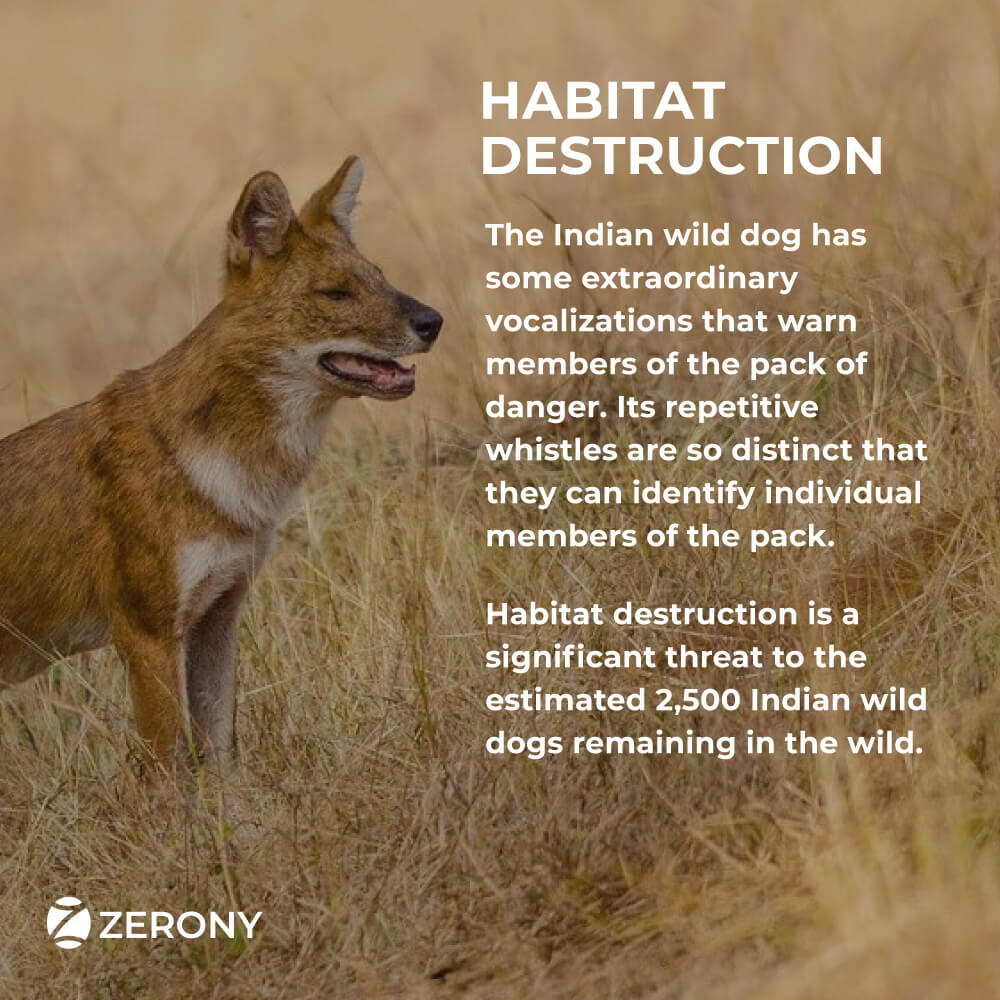
The dhole is found in most of India, mainly in the Central Indian Highlands and the Western and Eastern Ghats. It is also present in Arunachal Pradesh, Assam, Meghalaya and West Bengal and in the Indo-Gangetic Plain’s Terai region. Dhole populations in the Himalayas and northwest India are fragmented.
8. The Striped Hyena (धारीदार लकड़बग्घा)
Striped Hyena is the only hyena species found in India; it actually belongs to a different family than canids. It lives in dry areas, shrublands, and dense jungles. Striped Hyenas have large bodies, short legs, and a grey-brown coat with black stripes. When threatened, they raise the hair on their back to look bigger and more intimidating. They are mainly scavengers, feeding on carcasses rather than hunting for fresh prey.
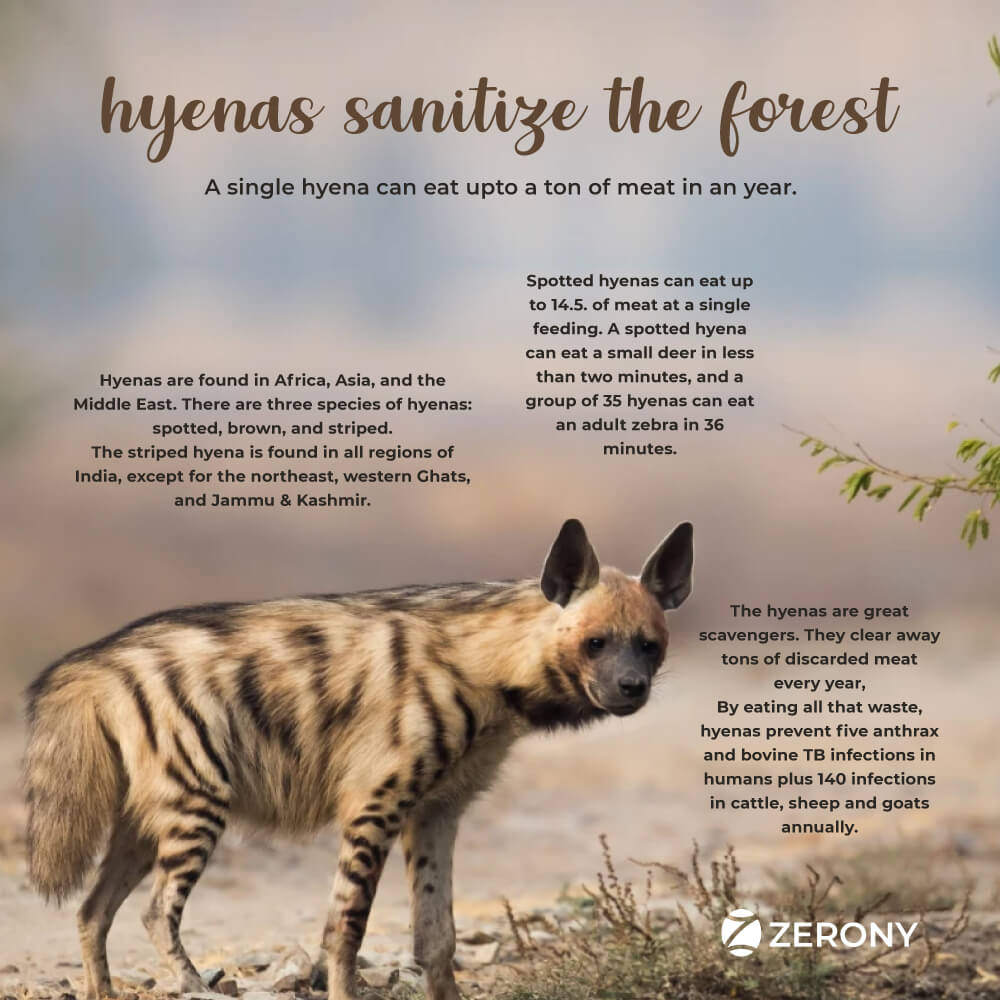
The striped hyena population in India is estimated to be between 1,000 and 3,000. They are classified as “near threatened” globally, with India potentially holding 20% of the world’s population. The species faces threats from habitat destruction, hunting, and road accidents.