India is home to many fascinating wildlife, from mammals to insects. And when it comes to butterflies, we have around 1,500 species of butterflies. Today, we are going to see some of the most beautiful butterflies of India.
If you want to learn more about butterflies and their families and identification, you can learn more here: https://www.zerony.in/families-of-butterflies/
1. Malabar Banded Peacock
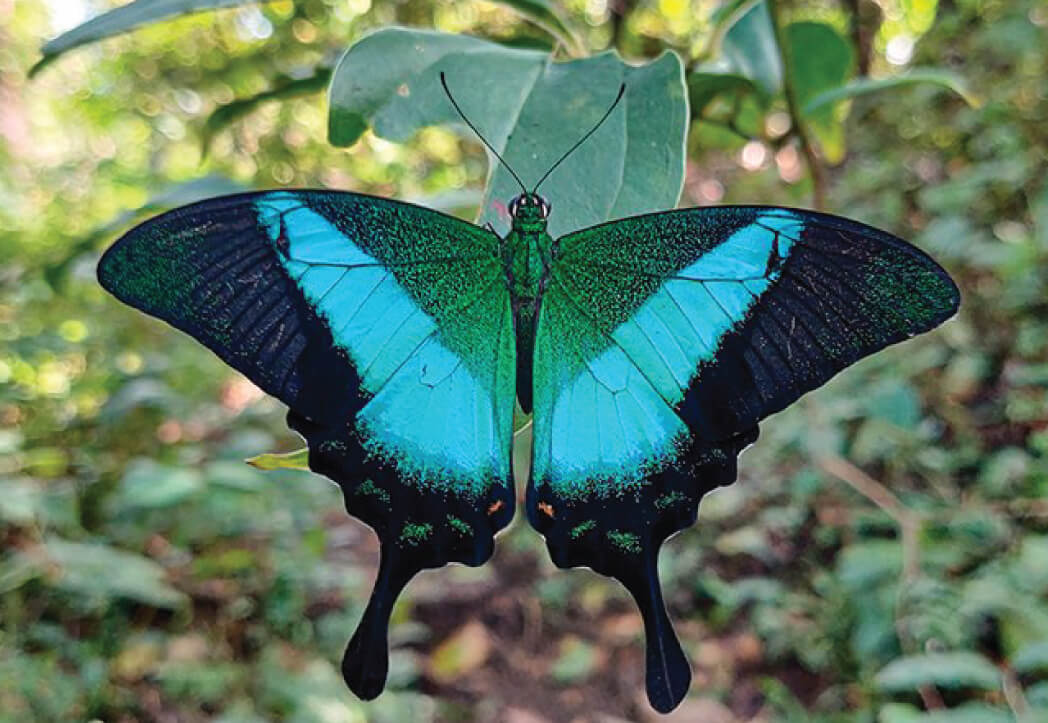
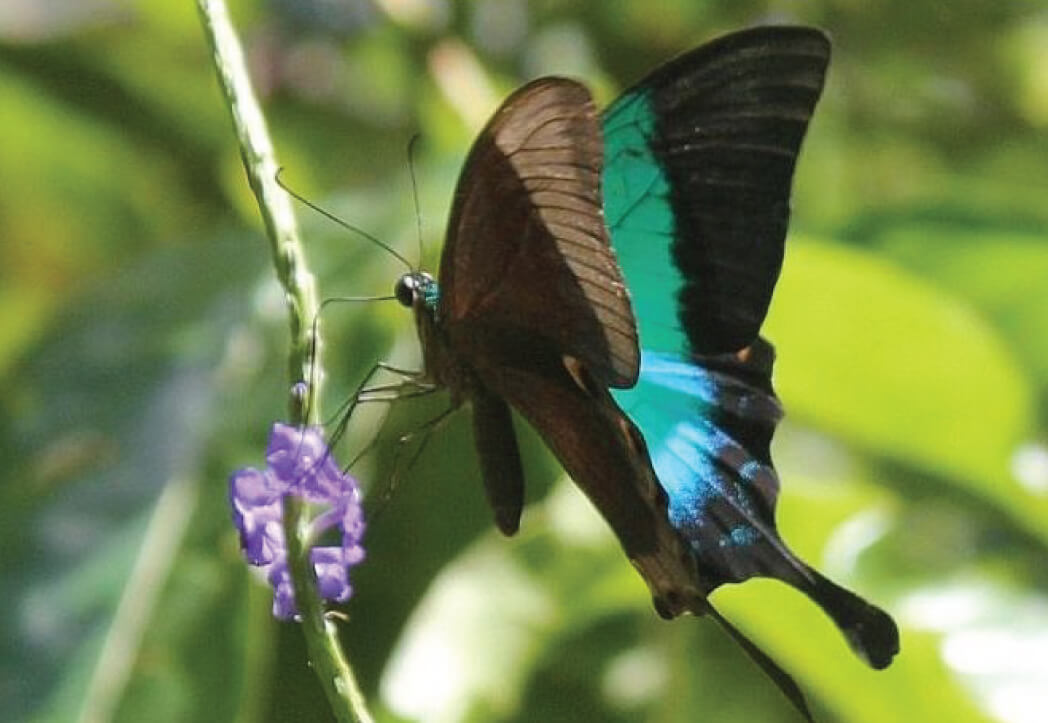
The Malabar Banded Peacock, Endemic to the Western Ghats, is a stunning, endangered swallowtail species is easily recognised by the dazzling, iridescent green and blue bands on its dark, velvet-like wings.
The state butterfly of Kerala is also the Malabar Banded Peacock (Papilio buddha), locally known as Budha Mayoori.
Host plant: Indian Prickly Ash
2. Kaiser-i-Hind
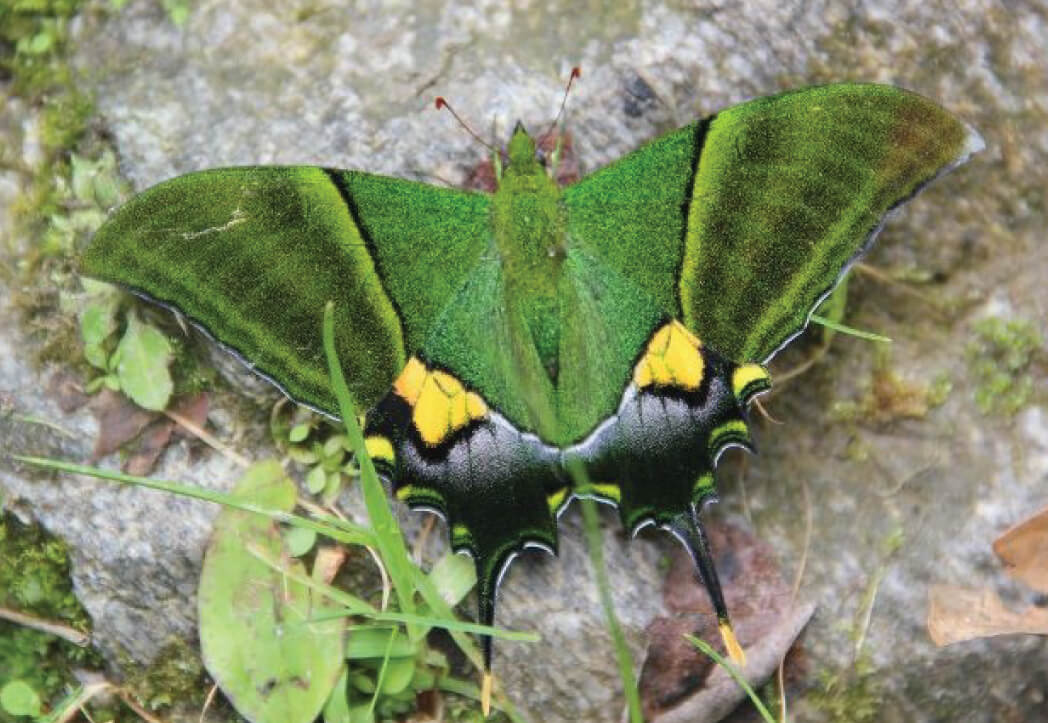
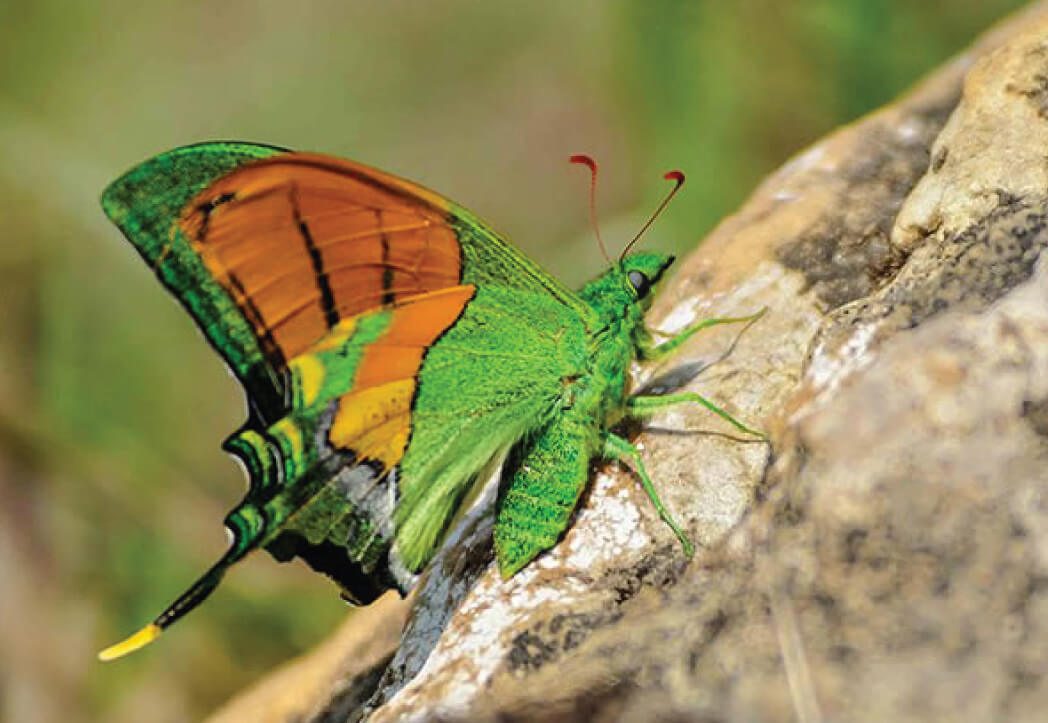
The Kaiser-i-Hind (Teinopalpus imperialis) is a rare swallowtail butterfly found at high elevations in the Eastern Himalayas. Its name means “Emperor of India”. Known for its striking emerald-green and bright yellow wings.
It features a wingspan of 90 to 120 mm. Males are predominantly green with a bright chrome-yellow patch on each hind wing, while females are typically larger.
Found in well-wooded, broad-leaved temperate evergreen forests at elevations between 6,000 and 10,000 feet.
Host plant: Magnolia campbellii, Daphne nipalensis.
3. Continental Great Mormon
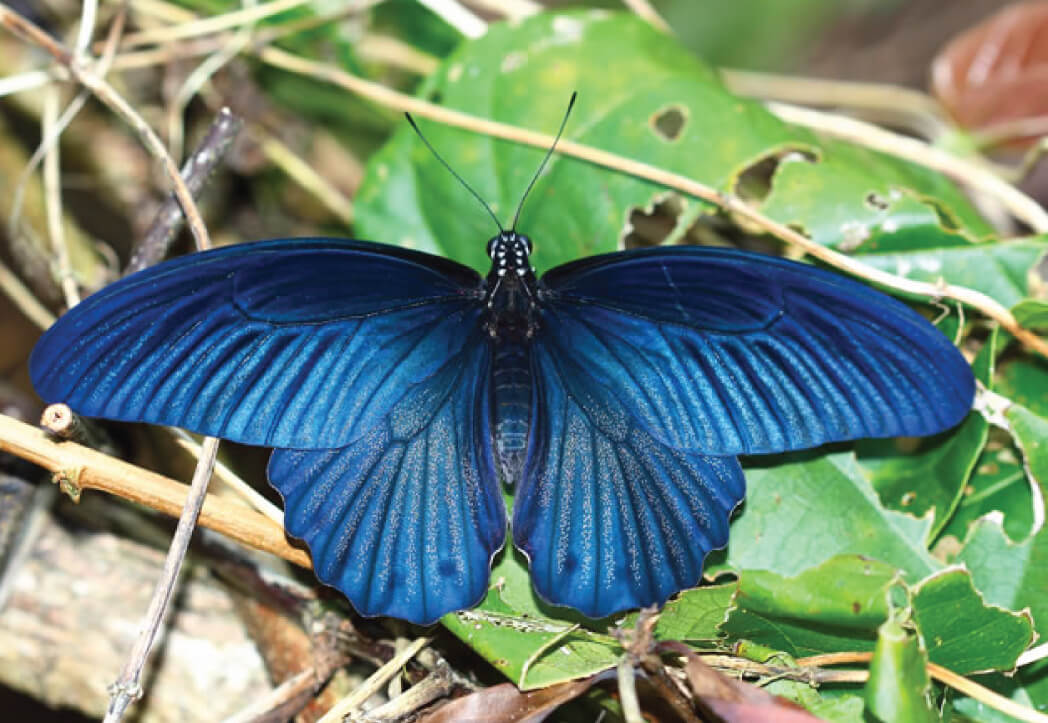
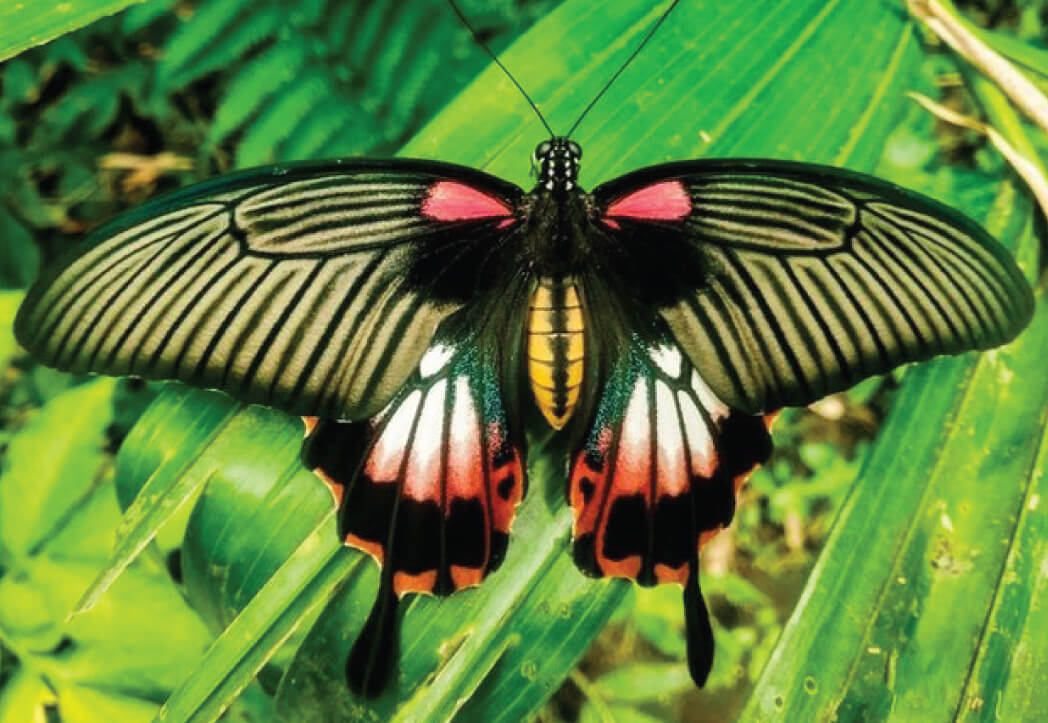
The Continental Great Mormon (Papilio memnon agenor) is a large swallowtail butterfly native to South and Southeast Asia.
Striking polymorphism—where the females mimic other poisonous butterfly species to avoid predators.
Host plant: Pomela (citrus maxima)
4. Bhutan Glory
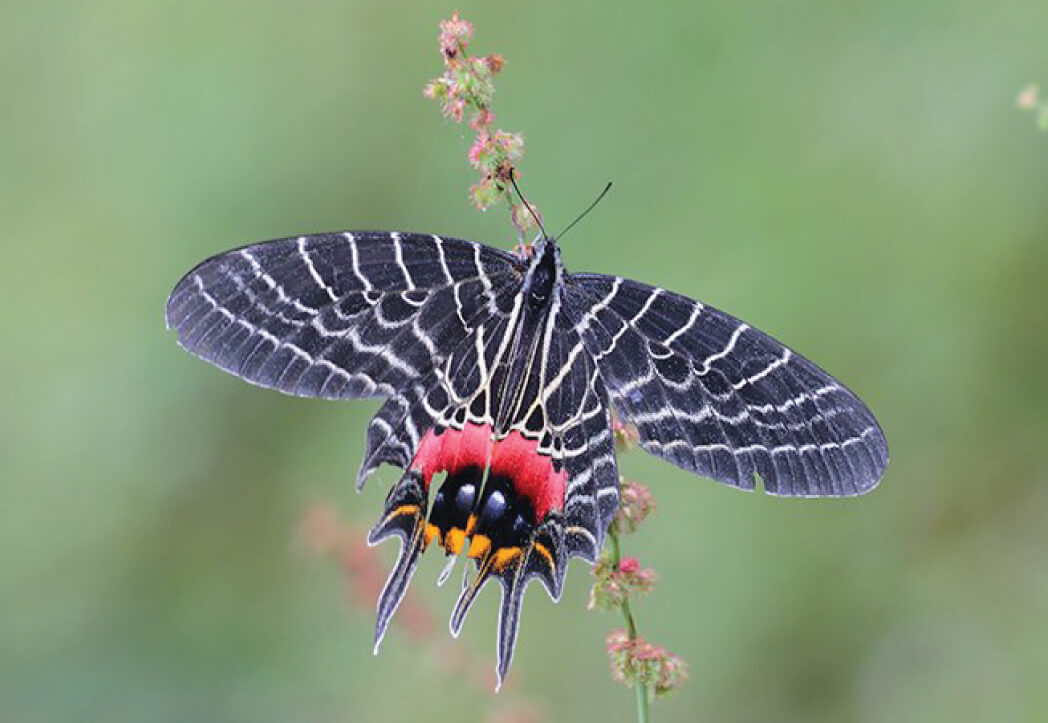
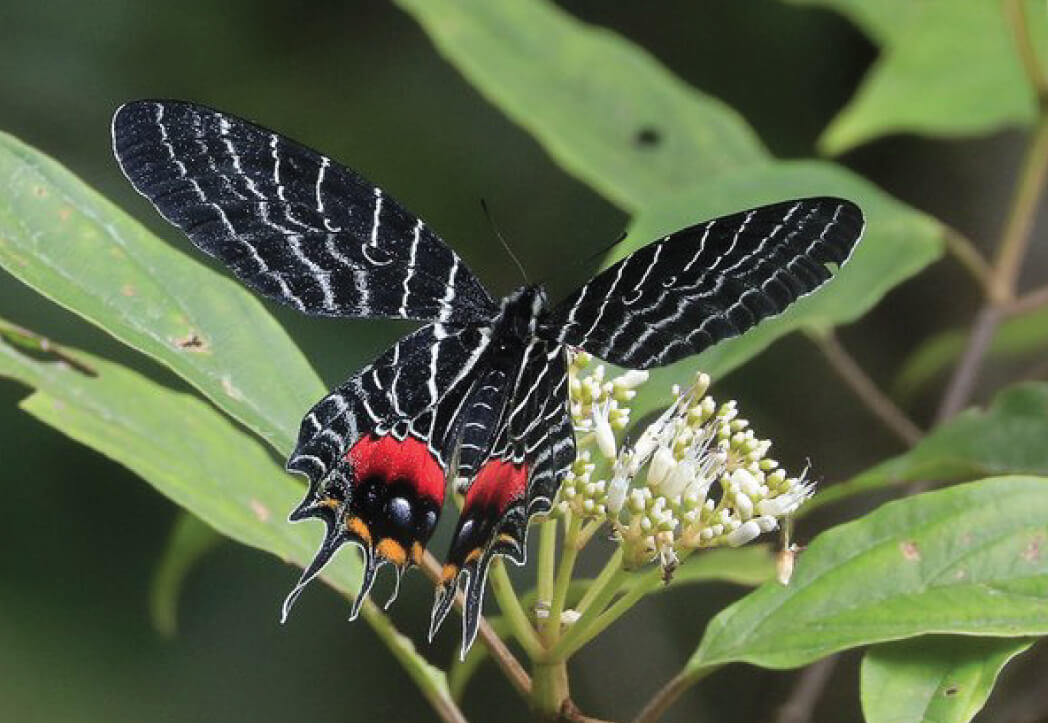
The Bhutan Glory (Bhutanitis lidderdalii) is a rare and spectacular swallowtail butterfly known for its velvety wings, distinct cream-colored stripes, and striking red-blue eyespots. It primarily inhabits high-altitude, mountainous ridge forests in Bhutan, parts of Northeast India (like Arunachal Pradesh), and Southeast Asia.
It has a highly specialised life cycle and relies entirely on specific host plants for the larvae to grow. Adult butterflies are remarkably long-lived.
Host plant: Aristolochia griffithii, A. kaempferi, and A. manchuriensis (Aristolochiaceae).
5. Blue Admiral
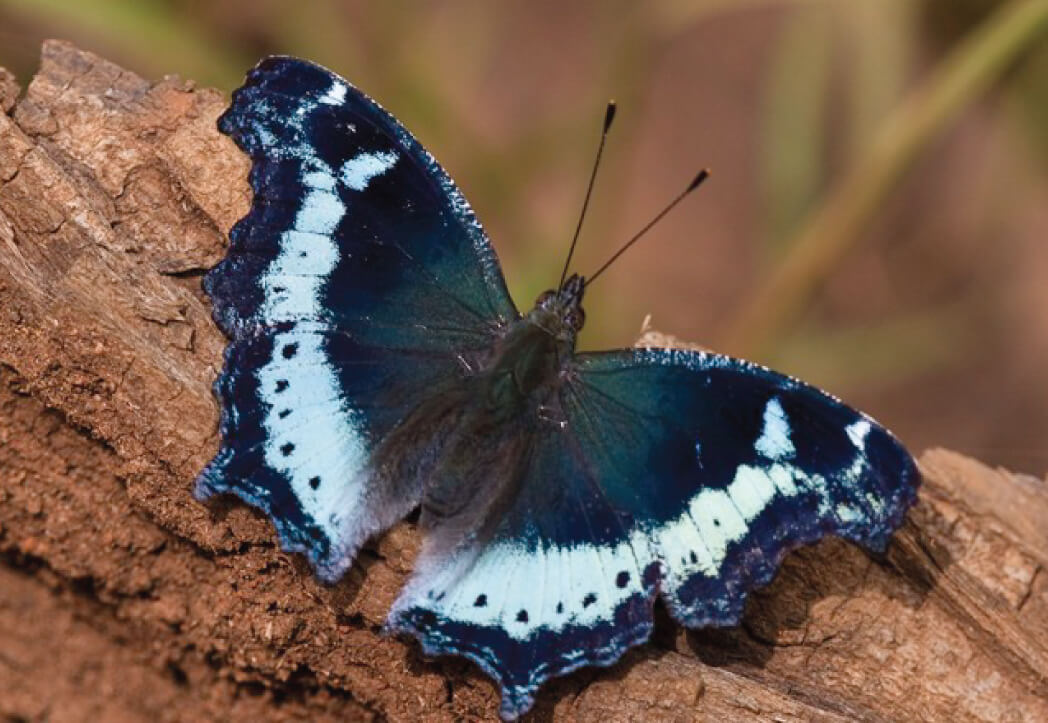
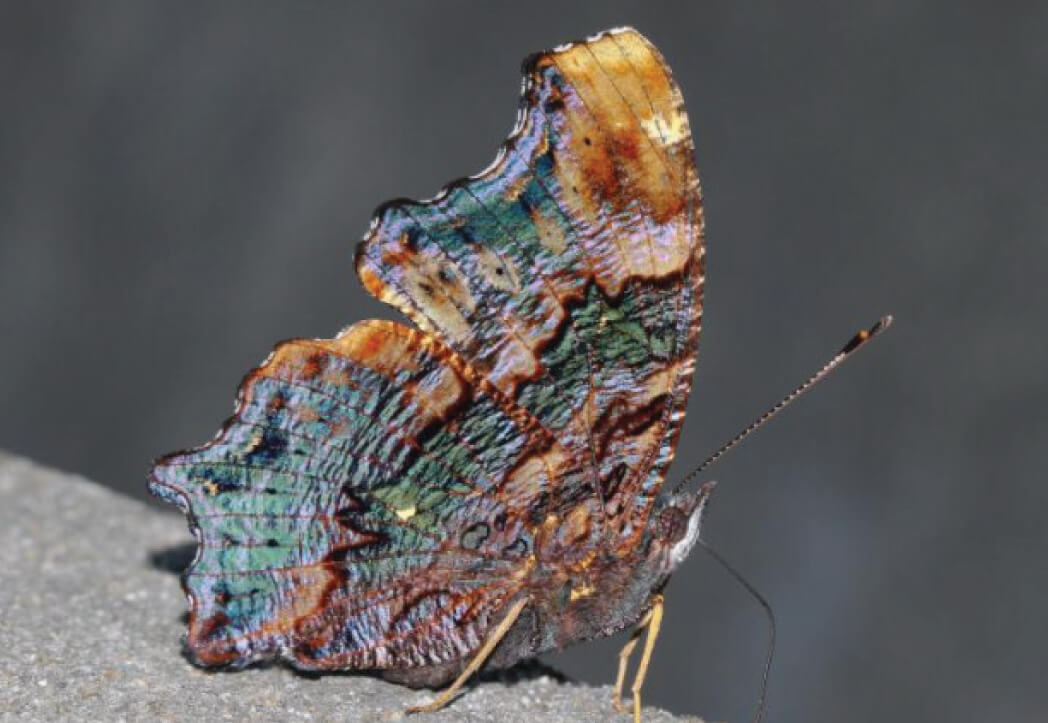
The Blue Admiral (Kaniska canace) is a highly territorial, vividly colored nymphalid butterfly native to South and Southeast Asia, ranging from India and Sri Lanka to Japan and Indonesia.
It is recognisable by its velvety black wings adorned with striking iridescent blue bands. Typically found in shaded evergreen and moist deciduous forests, frequently near water streams and forest trails.
Unlike many butterflies, it rarely feeds on flower nectar. It prefers fermenting tree sap, rotting fruits, and animal droppings.
Host plant: Smilax
6. Constable
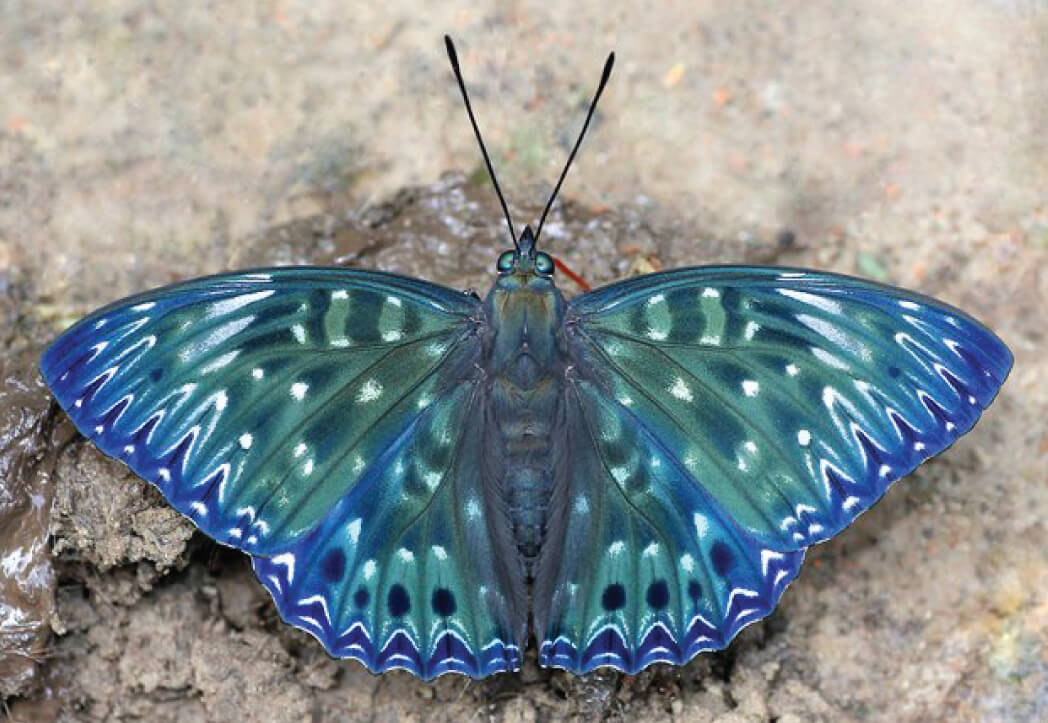
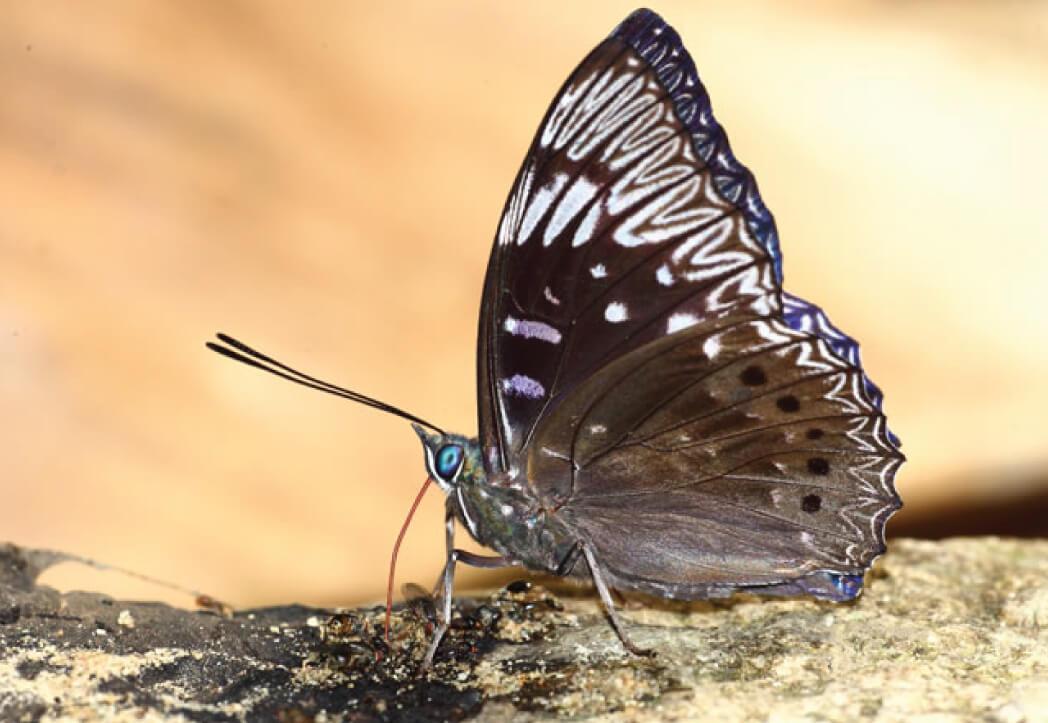
Dichorragia nesimachus, widely known as the Constable butterfly, is a striking, vividly patterned insect belonging to the brush-footed butterfly family, Nymphalidae.
It is famous for its unique wing patterns that resemble blue-green stars or marbles set against a dark background.
It primarily inhabits dense, moist forests and mountain trails across Asia, ranging from the Himalayas in India to Southeast Asia.
Males are often found mud-puddling on damp soil near streams or feeding on the ground. Both are highly attracted to fallen, over-ripe fruit, tree sap, and carrion rather than flower nectar.
7. Krishna Peacock
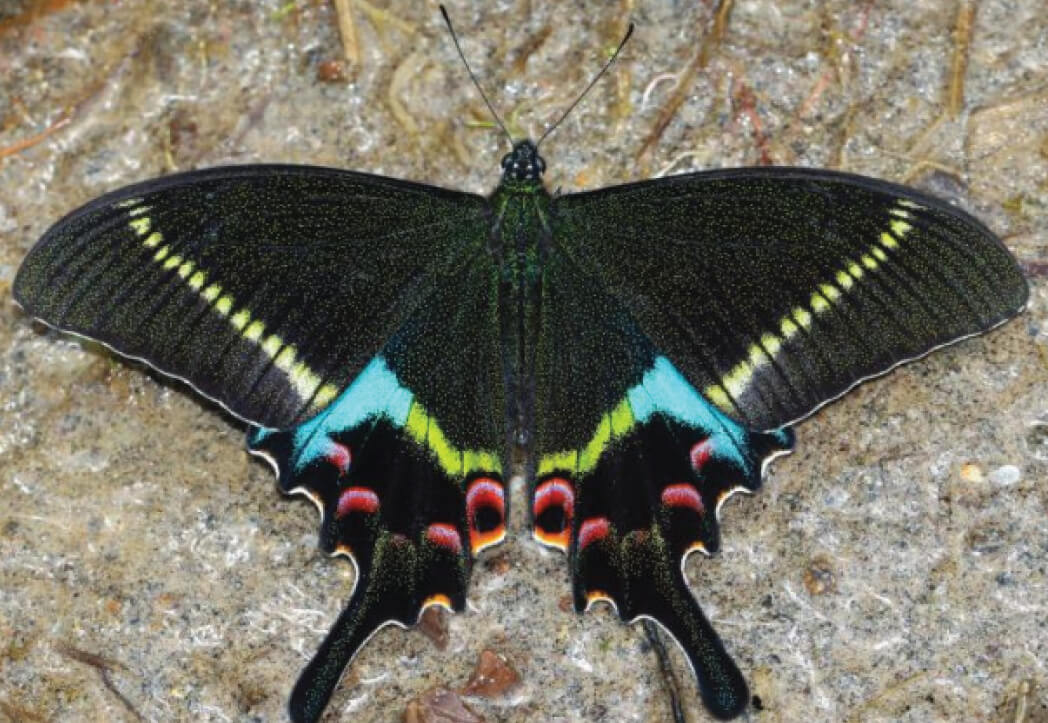
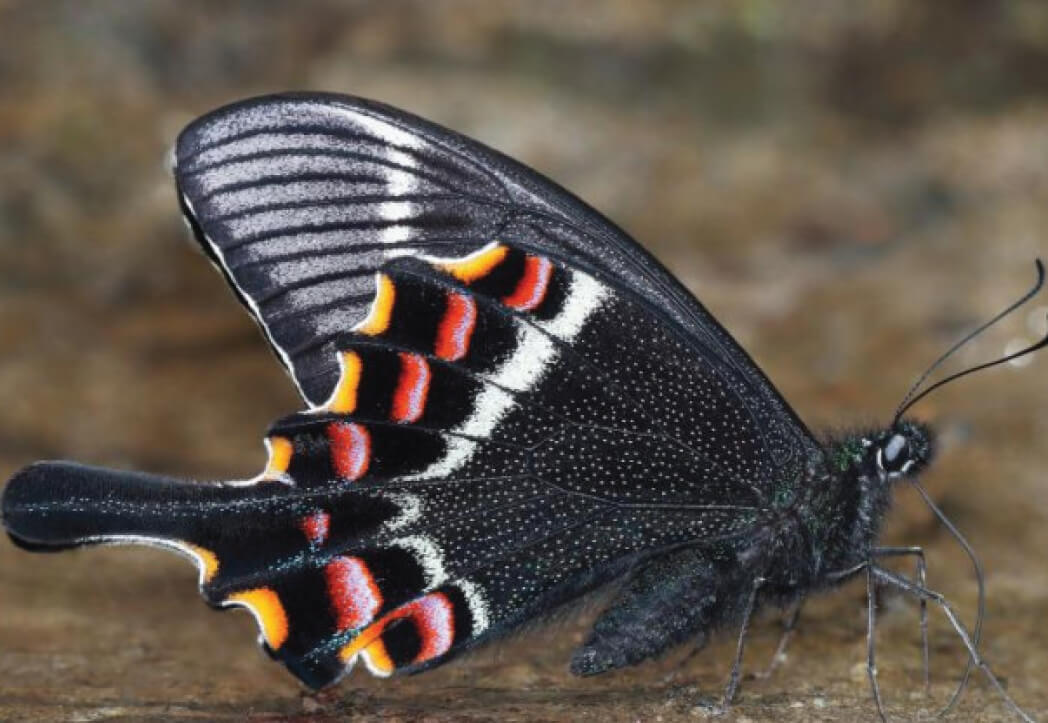
The Krishna Peacock (Papilio krishna) is a large, stunning swallowtail butterfly found in the Himalayan regions of India, Nepal, Bhutan, Myanmar, and Vietnam.
Named after Lord Krishna for its deep, iridescent blue-green colouration, it typically flies at high elevations between 3,000 and 9,000 feet.
Host plant: Galgal nimbu (citrus medica)
8. Map Butterfly
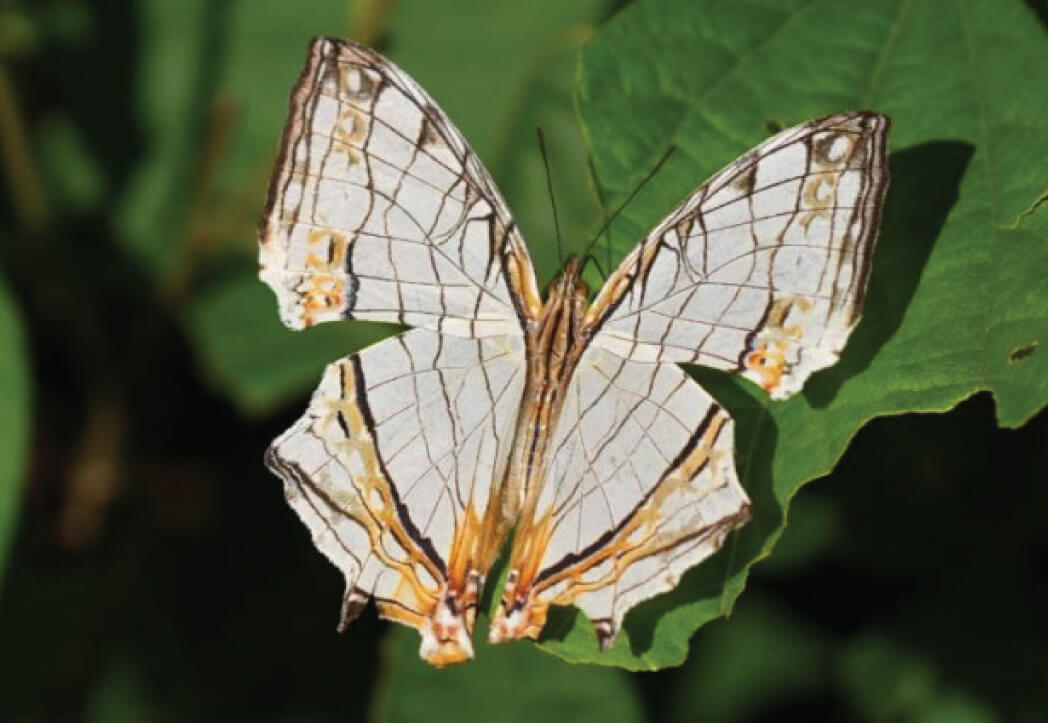
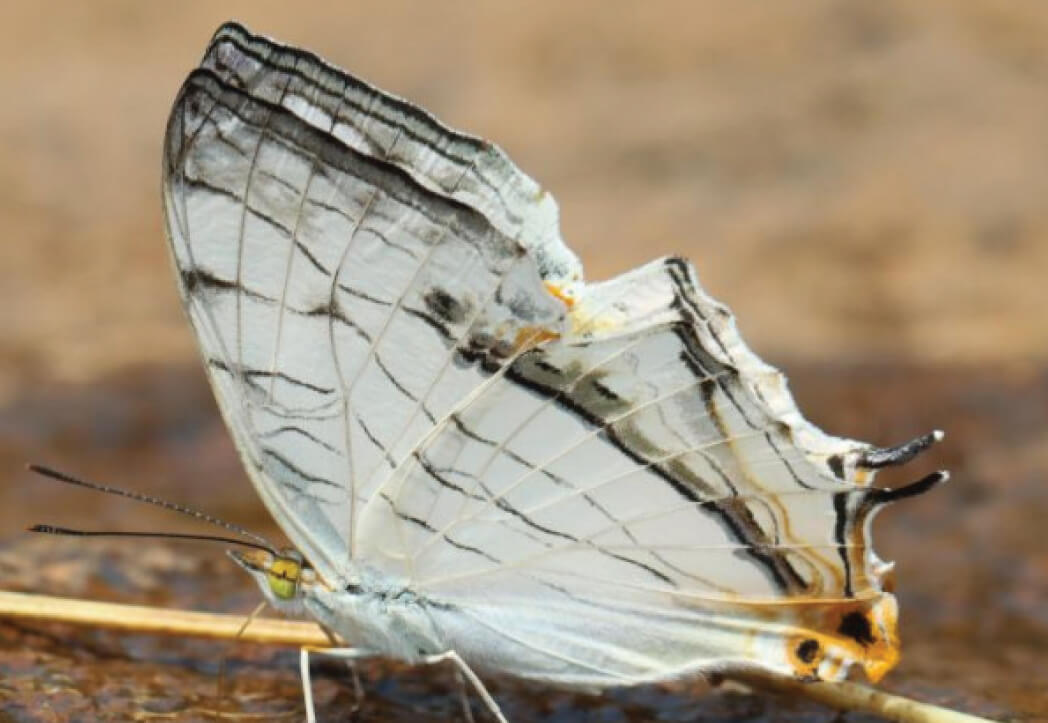
The Common Mapwing (Cyrestis thyodamas) is a unique butterfly recognized by the fine, black, maze-like lines on its translucent wings that resemble an ancient geographical map.
Native to South and Southeast Asia, its delicate pattern provides natural camouflage among forest canopies and dried leaves.
Found in moist, shaded tropical forests, often found fluttering near streams or damp soil in lower to mid-elevation mountainous regions (such as the Himalayan foothills and the Western Ghats)
Adults frequently engage in “puddling” behaviour, resting on animal droppings or mud to absorb vital mineral salts.
Host plant: Cluster fig, peepal, banyan.
9. Long-branded Blue Crow
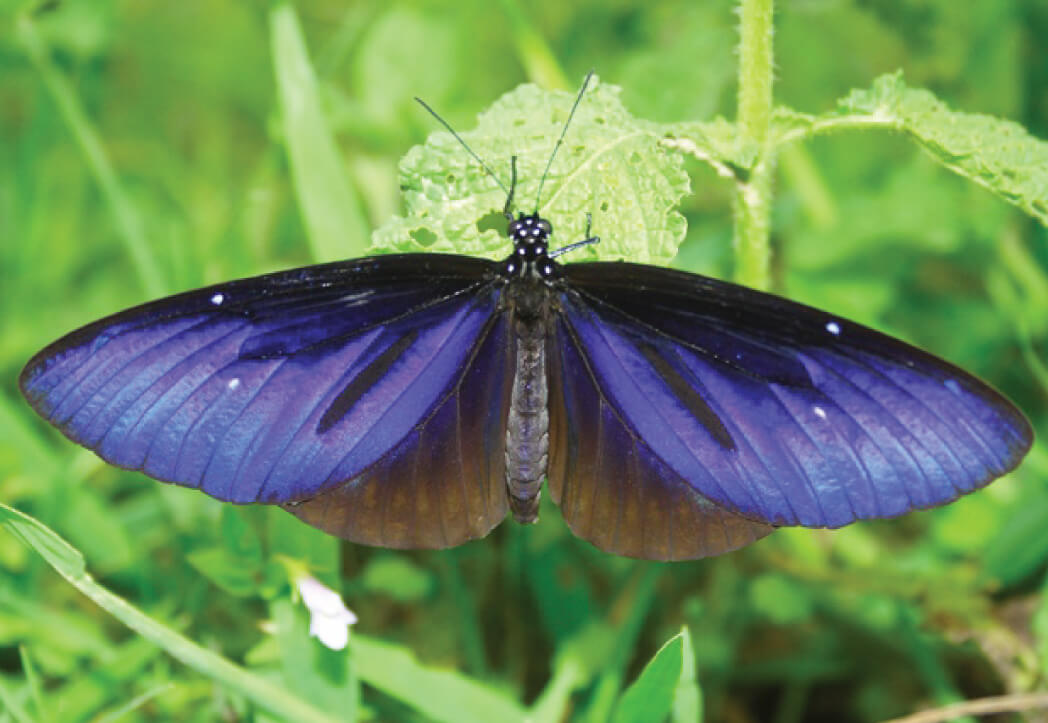
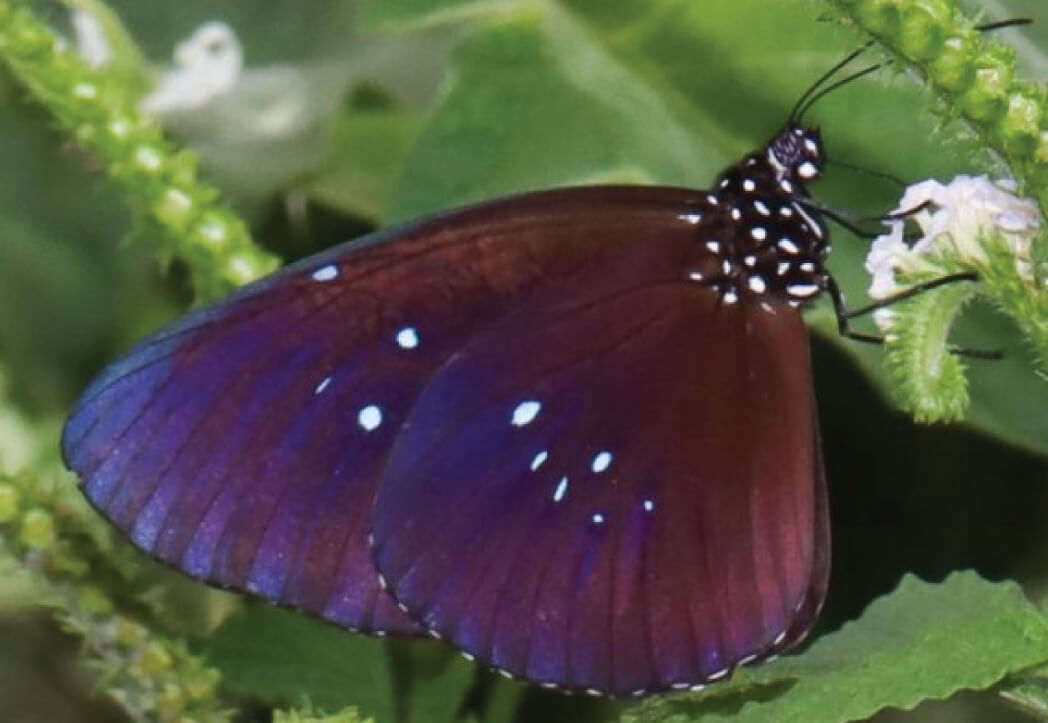
Featuring dark, velvety wings highlighted by shimmering blue hues and distinct white markings. It thrives in tropical forests, woodlands, and subtropical environments.
Like other Crow butterflies, it is somewhat toxic to predators due to the poisonous plants its caterpillars feed on.
Host plant: Ficus tinctoria (dye fig and humped fig)
10. Yellow Pansy
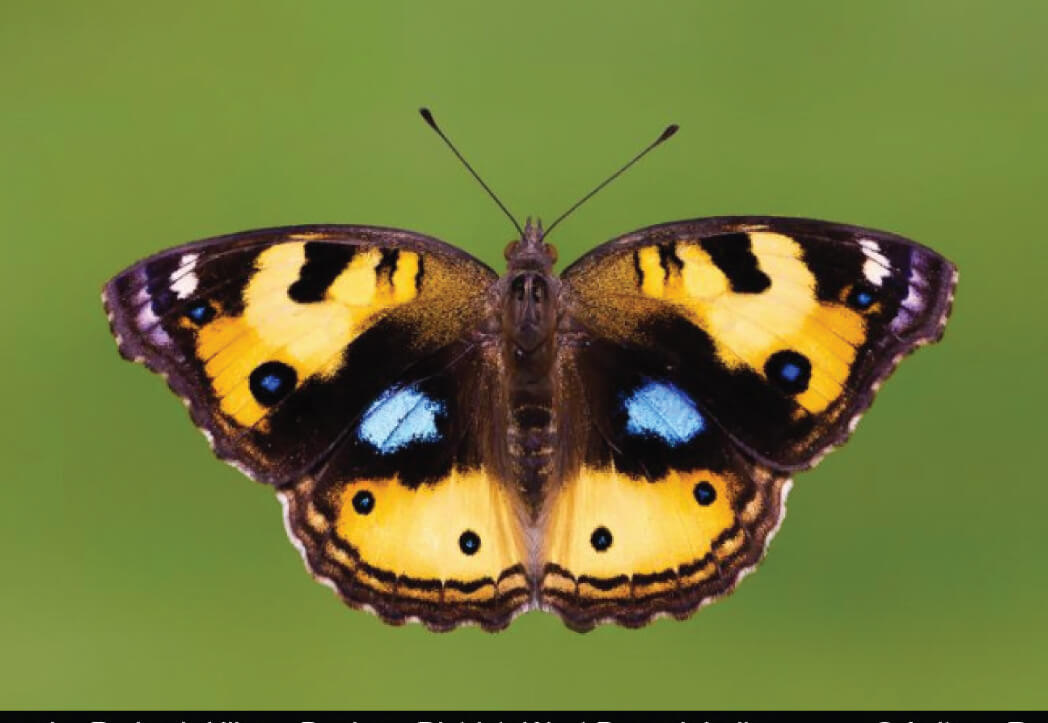
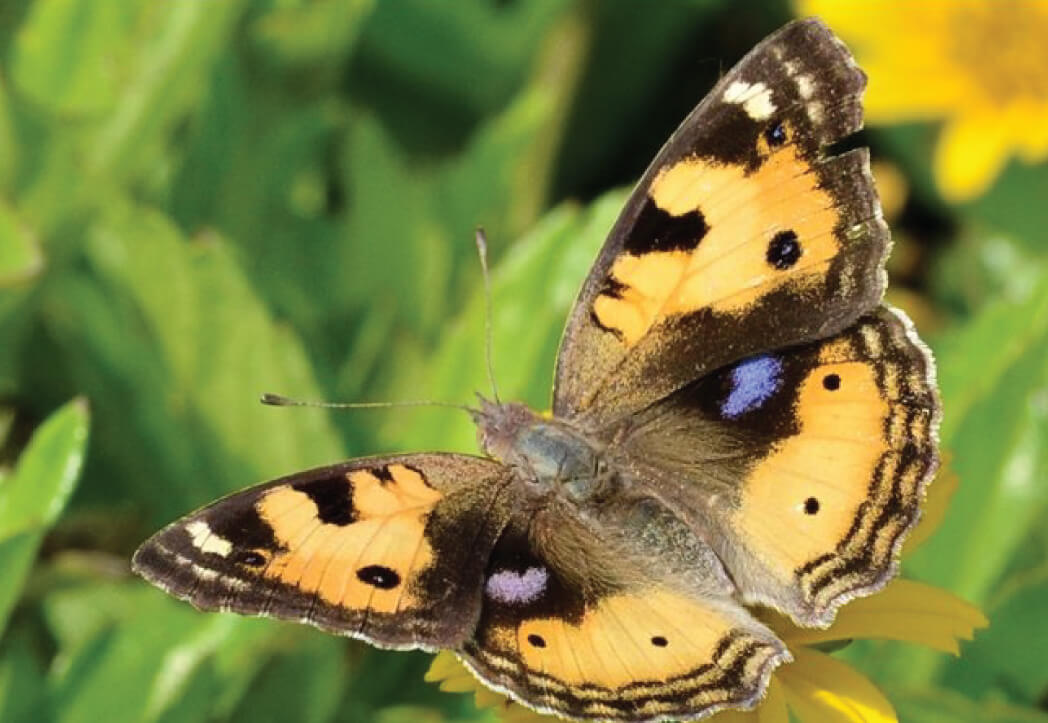
The Yellow Pansy (Junonia hierta) is a striking, sun-loving butterfly recognised by its brilliant yellow and jet-black upper wings, accented with glowing blue or purple spots. Native to Africa, Arabia, and tropical Asia, it thrives in open scrub, grasslands, and gardens.
When at rest on the ground or dead leaves, their wings close to reveal a duller brown and grey underside, perfectly camouflaging them from predators.
Host plant: Asystasia, Barleria, Eremomastax, Hygrophila auriculata, Hygrophila costata, Justicia, Ruellia, and Mimosa pudica.
11. Blue Pansy
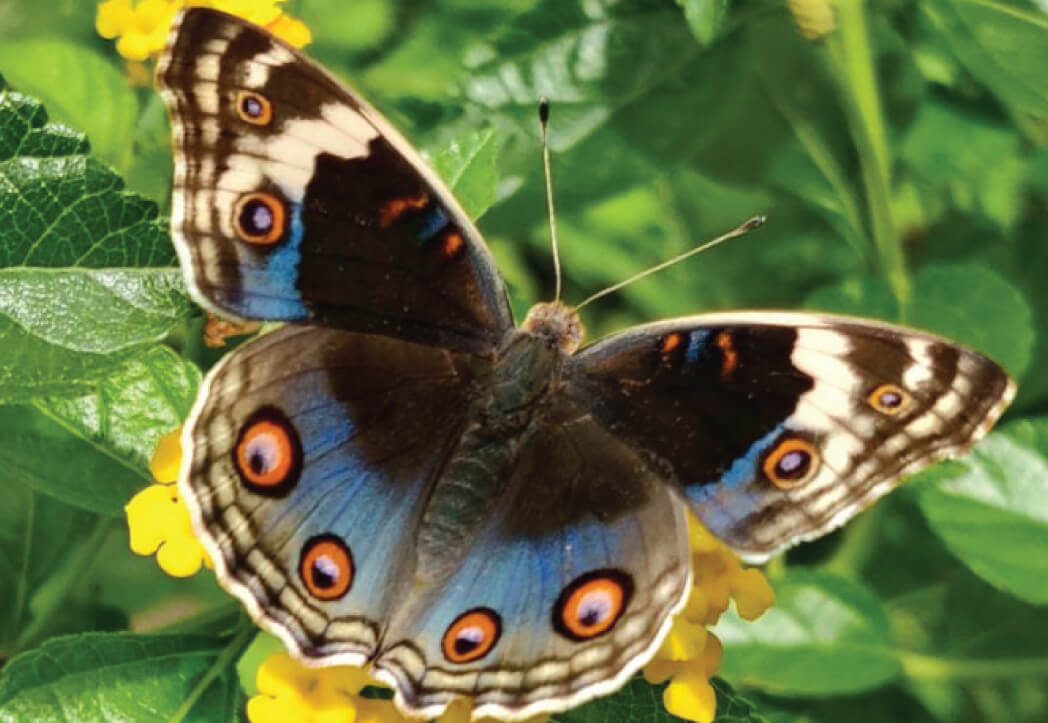
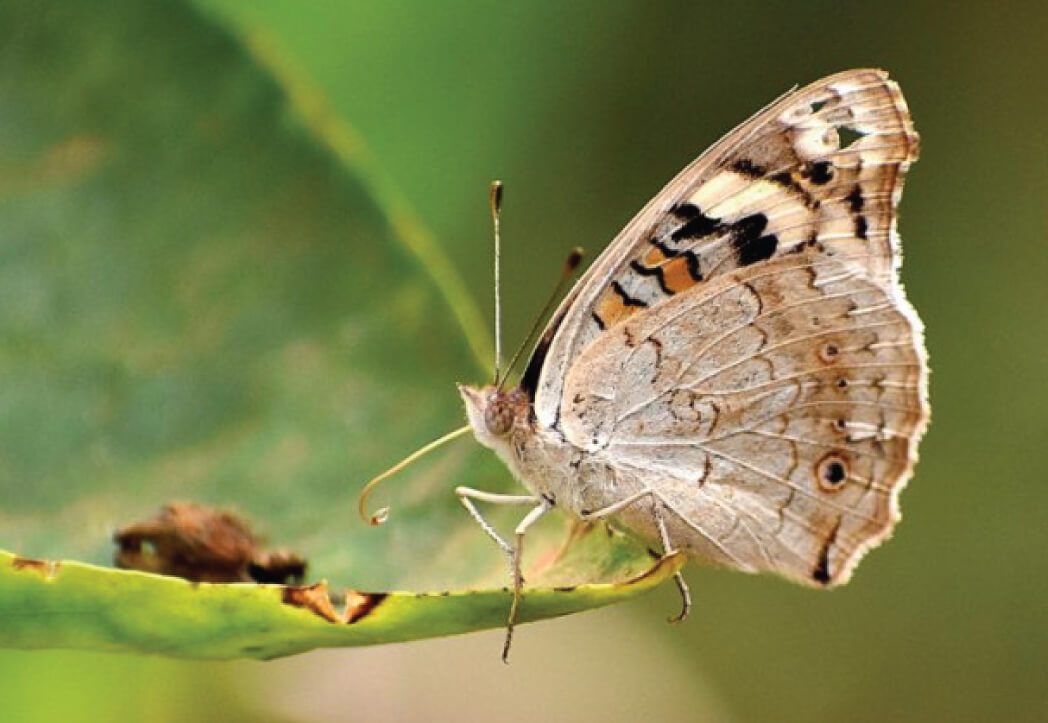
The Blue Pansy (Junonia orithya) is a stunning, medium-small brush-footed butterfly famous for its vibrant blue hindwings and prominent, dazzling eyespots. It is officially designated as the State Butterfly of Jammu and Kashmir.
The large eyespots act as a defence mechanism. They intimidate predators or trick them into attacking non-vital parts of the wing, allowing the butterfly to escape.
Host plant: Acanthus, Barleria, Barleria mysorensis, Hygrophila auriculata, Justicia micrantha, Justicia neesii, Justicia procumbens, Lepidagathis keralensis, Nelsonia canescens, Ruellia tuberosa, Ipomoea batatas, Mimosa pudica, Plectranthus scandens, Misopates orontium, and Lepidagathis prostrata.
12. Orange Oakleaf
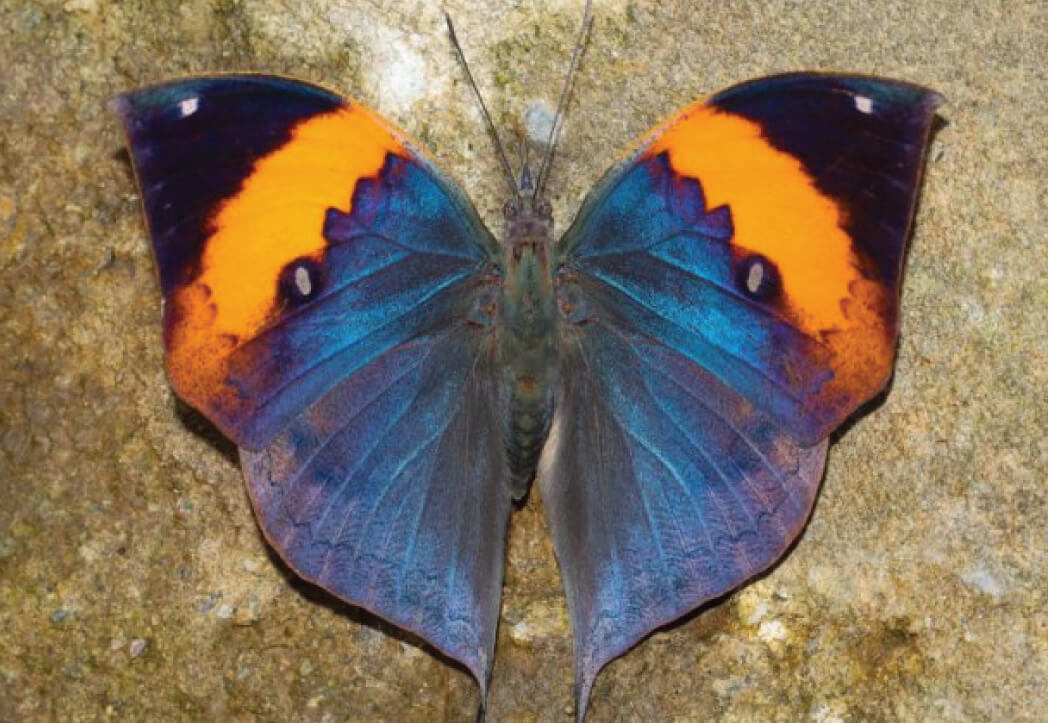
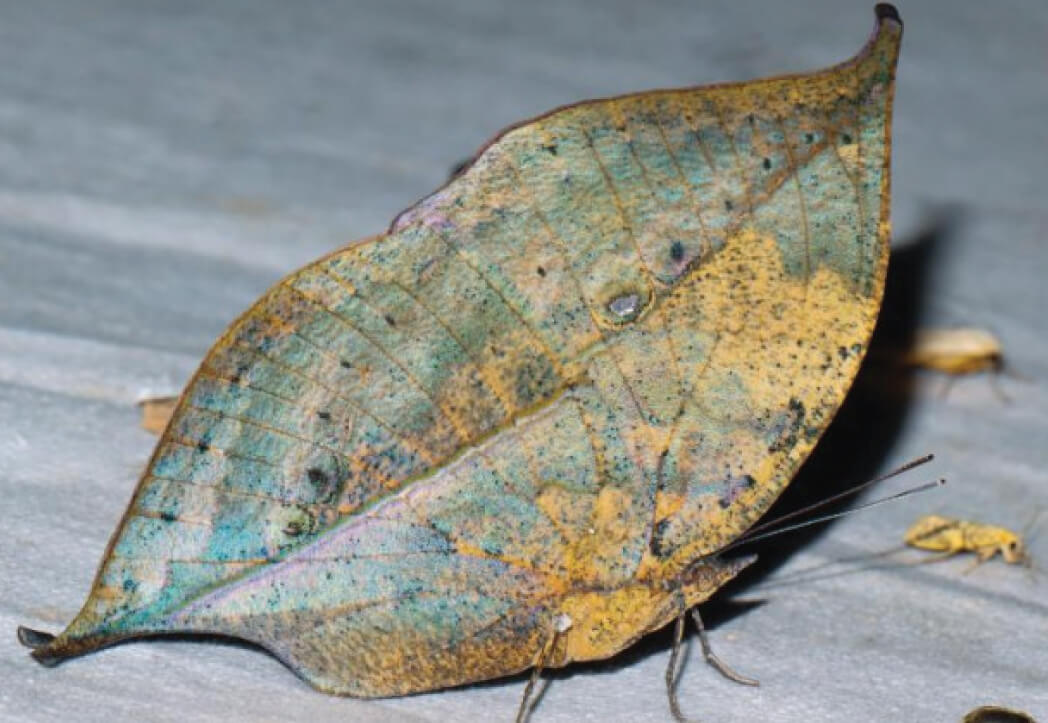
The Orange Oakleaf (Kallima inachus) is a striking butterfly native to tropical Asia, famous for its master camouflage. When perched with closed wings, its brown, leaf-like underside makes it look exactly like a dead, dry leaf. In flight, its wings reveal a vibrant mix of bright orange, deep blue, and black.
Consumes tree sap, rotting fruit, and utilizes mud-puddling for essential minerals.
Host plant: Prunus persica (peach), Girardinia diversifolia (Himalayan nettle)
13. Popinjay
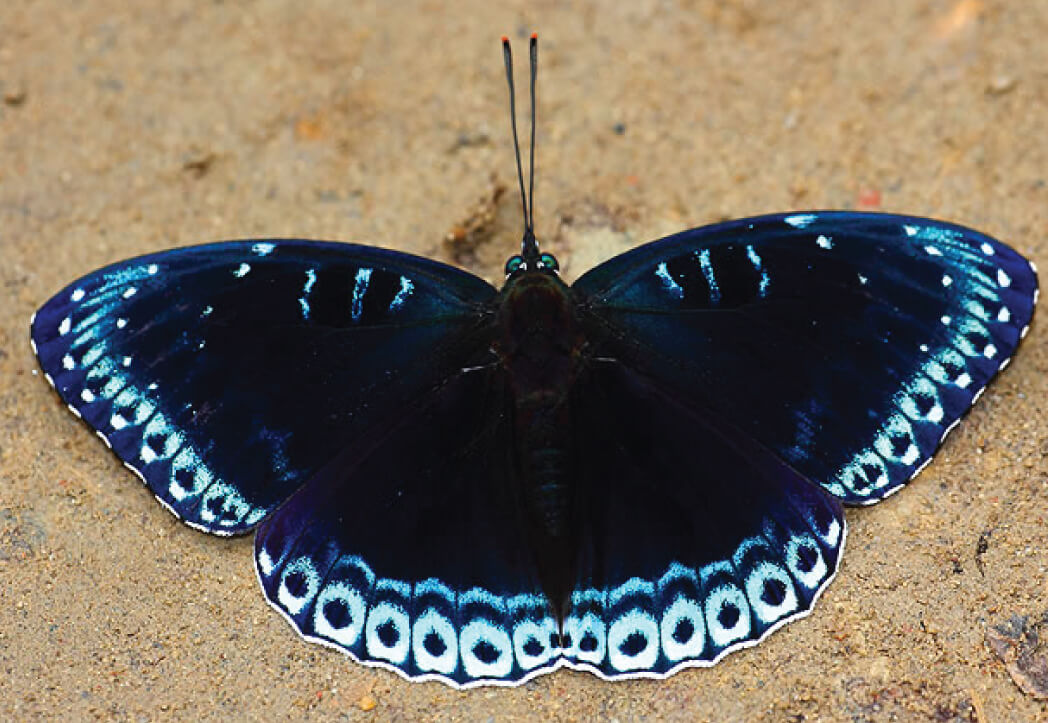
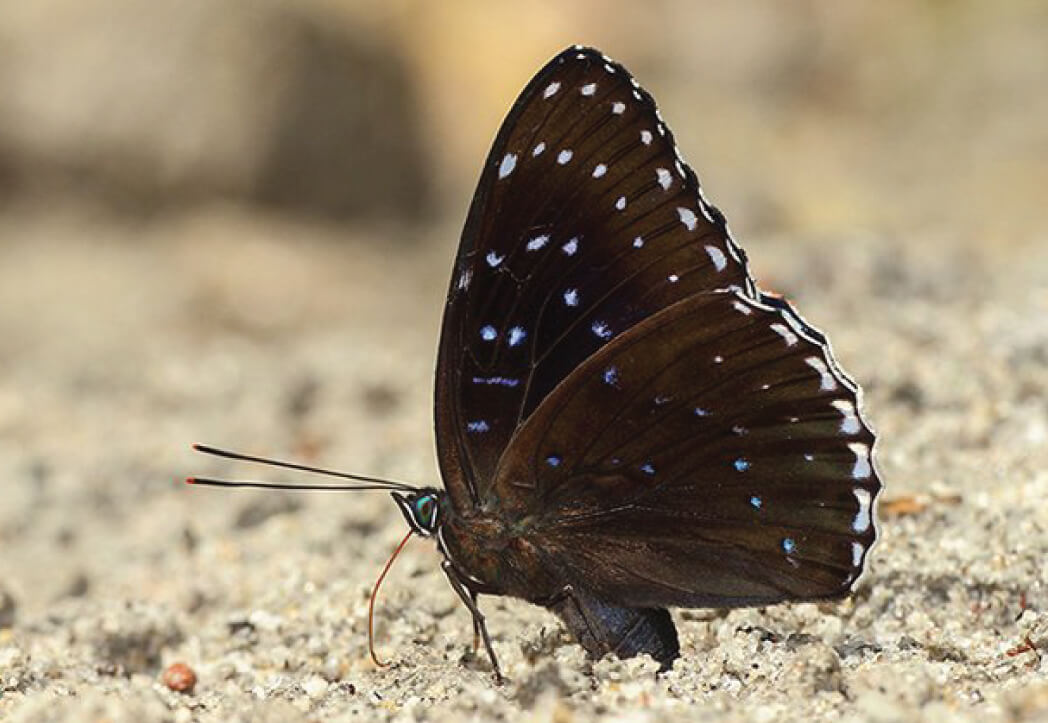
The Popinjay (Stibochiona nicea) is a stunning, medium-sized brush-footed butterfly found primarily in the forests of South and Southeast Asia. It is highly prized by wildlife enthusiasts for its striking dark wings, intricate white spots, and vibrant blue marginal borders.
They thrive in the Himalayas, mid-elevation forests, and hilly terrains up to 2500m. You can find them in India (ranging from Jammu & Kashmir to the Northeast), Nepal, Bhutan, and parts of Southeast Asia.
Host plant: False Nettle
14. Crimson Rose
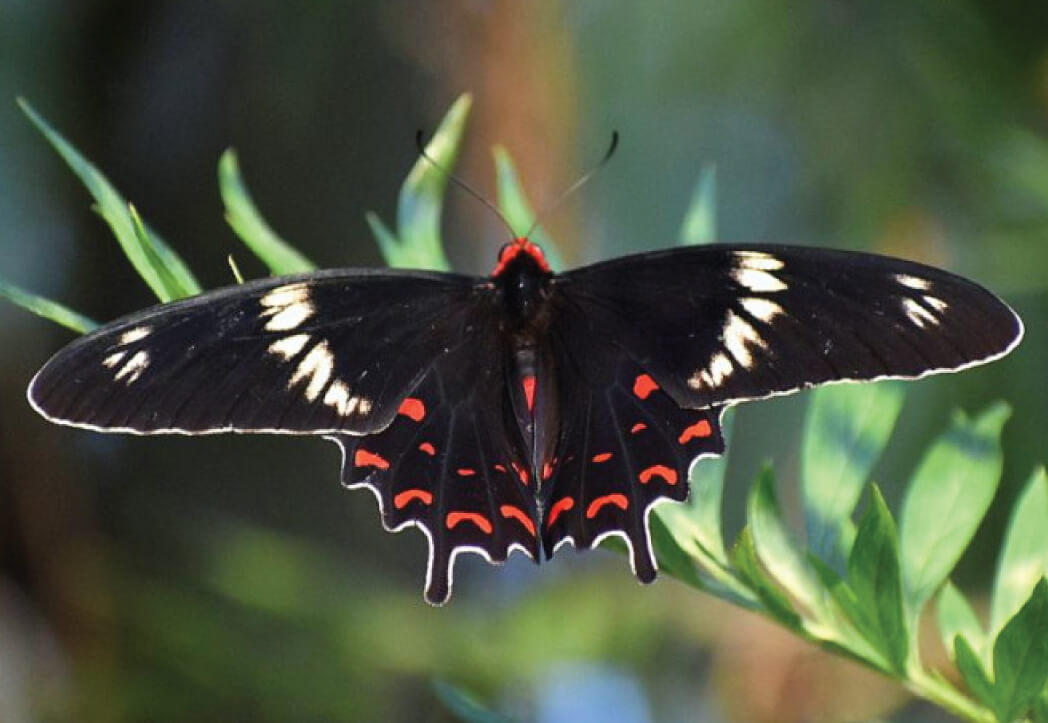
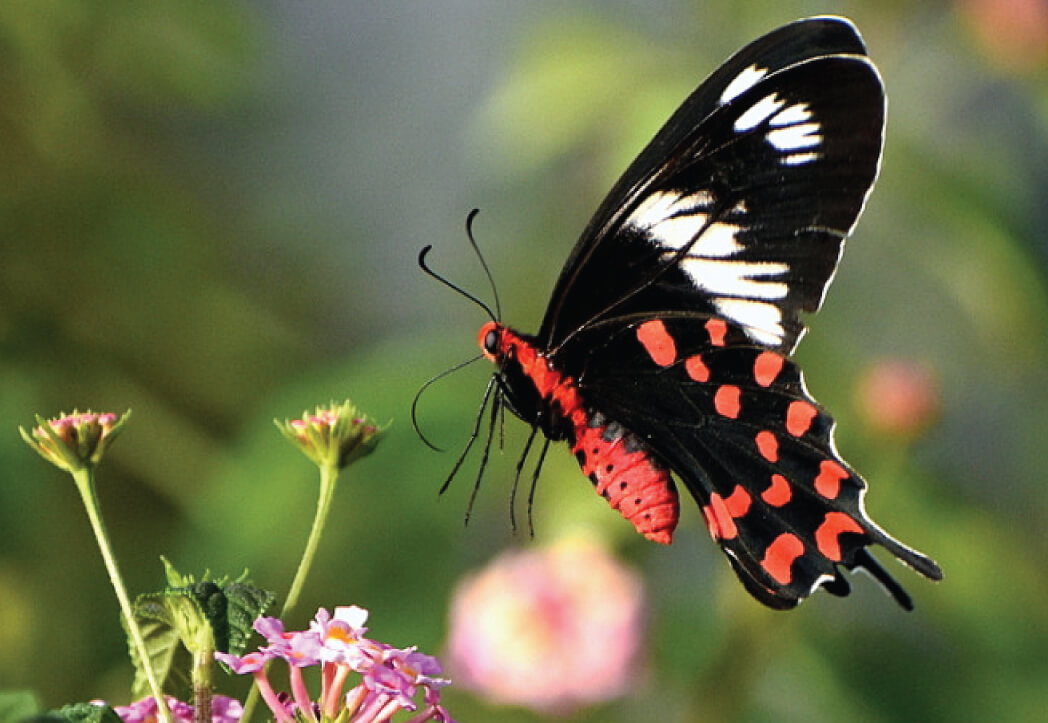
The Crimson Rose (Pachliopta hector) is a large, striking swallowtail butterfly native to South Asia, primarily found in India, Sri Lanka, and the Maldives.
It is easily recognised by its velvety black wings, bold white bands, and bright crimson spots.
Host plant: Aristolochia bracteolata, Aristolochia griffithii, Aristolochia indica, Aristolochia tagala
All the images have been taken from https://www.ifoundbutterflies.org/