Beetles are one of the most common and diverse kinds of insects. Beetles are found all over the world, from the poles to the grassland. Some beetles, like the Khapra beetle, are one of the world’s most destructive pests of grain products and seeds; on the other hand, fireflies are one of the magical beetles that glow in the dark.
India has a remarkably diverse beetle fauna, with an estimated 300,000 species. This makes Coleoptera, the order of beetles, the most species-rich group in the world. Roughly 40% of all insect species are beetles. As you can see, the large numbers of beetles also come in many different shapes and sizes, from microscopic to gigantic. In India, the smallest beetles are Featherwing Beetles (Family Ptiliidae), most of which are just 1 millimetre long. On the other hand, the Giraffe Stag Beetle (Family Lucanidae) can be more than 4 inches long.
Let’s take a look at the most common families of beetles found in India.
1. Leaf Beetles (Family Chrysomelidae)
Leaf beetles in India are a massive group of beetles that are found in many regions of India. These beetles are found on many plants, including both agricultural crops and wild plants or trees. Some leaf beetle species are pests for our agricultural crops, causing massive damage to crops like rice, loki (bottle gourd), and many cruciferous vegetables like cauliflower, broccoli, radish, cabbage, etc.
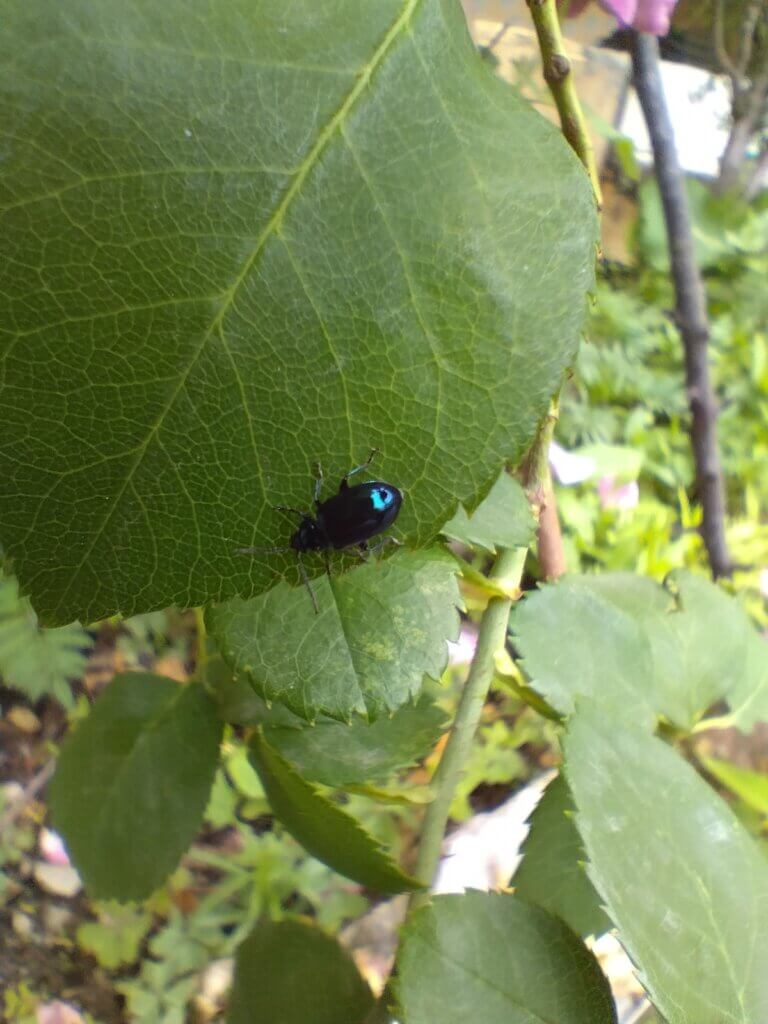
Leaf beetles are herbivorous. Most adult beetles feed on leaves and flowers of flowering plants, but larva diets are very diverse. Larva feeds on many things like seeds of legumes, flowers, leaves, roots, dead plants or even dead animal matter.
Most common Leaf beetles of India:
- Platycorynus peregrinus
- Aulacophora indica
- Monolepta signata
- Parthenium Beetle
- Green Tortoise Beetle
- Furcated Tortoise Beetle
- Asian Spotted Tortoise
- Lema praeusta
- Oides affinis
- Frog-legged Leaf Beetle
There is no exact number of leaf beetle species found in India, but studies have reported from 100-200 species in different regions and ecosystems.
2. Scarabs (Family Scarabaeidae)
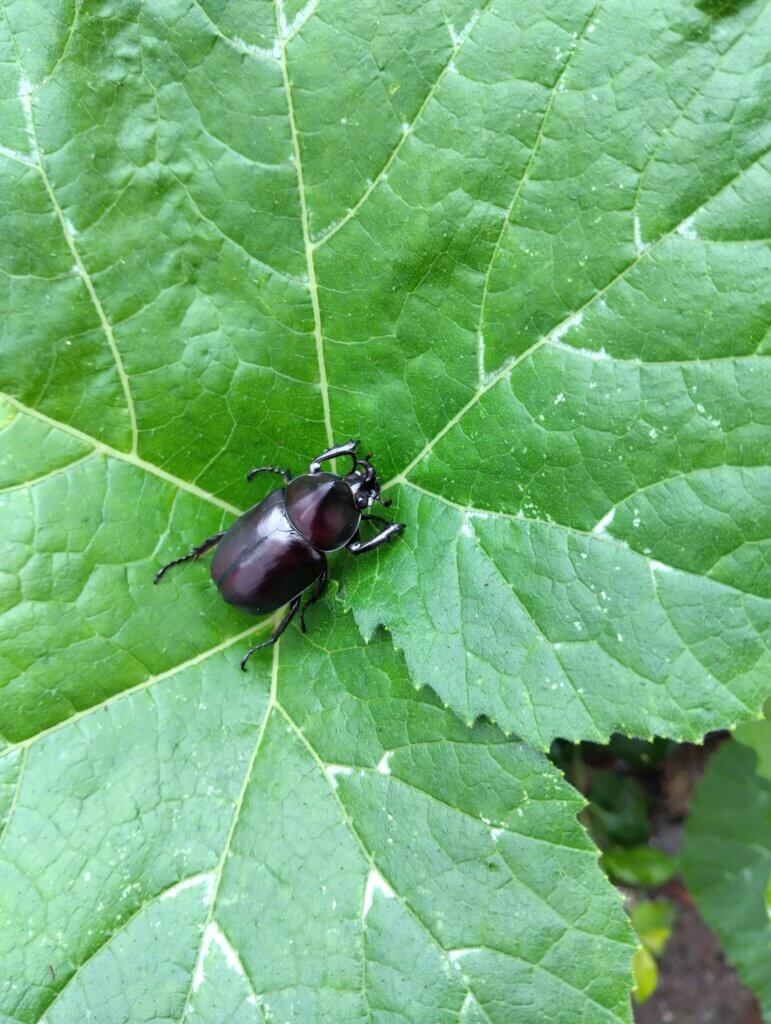
There are more than 2,000 species of scarab beetles found in India. These beetles are known for their ecological importance; they decompose tons of organic matter and make the soil fluffy and full of air. That is very important for the growth of healthy vegetation. Scarab beetles are fat-bodied, most of them are brown and black in colour, and some are metallic in colour.
Most common species of Scarab beetles:
- Coconut Rhinoceros Beetle
- Indian Flower Chafer
- Heterorrhina elegans
- Protaetia aurichalcea
- Molossus Dung Beetle
- Anomala pallida
- Clinteria klugi
- Siamese Rhinoceros Beetle
One of the most common scarab beetles you might have heard about is the dung beetle. They are ecological warrior, vital for nutrient cycling, decomposition, and soil health. They handle waste management by consuming and burying dung. Dung beetles improve soil health by aerating the soil through their burrowing activities. This improves water infiltration and root growth, ultimately benefiting plant life.
A single elephant poop about 75 kg every day, and now imagine a group of 50 elephant and their poop, it would be around 3,750 kgs!! And in a single year, it would be 13,68,750 kgs or approximately 1400 tons of poop. And if we add on other plant-eating animals like deer, boars, monkeys, then there will be mountains of poop in the jungles, but have we ever seen any mountain of poop? NO!!
Why? Because we have got Dung beetles, they eat and convert this massive amount of poop into fertile soil that helps the forest. And also dung beetles reduce the population of buffalo and horn fly by 95%, which makes cattle and other grazing animals sick.
3. Lady Beetles (Family Coccinellidae)
These are the most commonly seen and recognisable beetles, those red and black insects, we often see quietly and harmlessly sitting on the leaves. There are more than 500 species of lady beetles found in India. They help us in our garden and farms by eating and controlling major agricultural pests.
Most common species of Lady beetles:
- Six-spotted Zigzag Ladybird
- Small Transverse Ladybird Beetle
- Seven-spotted Lady Beetle
- Maculate Ladybird
- Sixteen-spotted Ladybird
- Variegated Lady Beetle
Most Lady beetle species are carnivorous predators, preying on insects such as aphids and scale insects. Other species are known to consume plants and fungi.
4. Tiger Beetles (Family Cicindelidae)
Tiger beetles are known for their aggressive predatory habits and running speed. The fastest known tiger beetle, Rivacindela hudsoni, can run at a speed of 9 km/h. Many tiger beetles have large, bulging eyes and long, thin legs. All tiger beetles are predatory, both as adults and as larvae. They prey on anything they can catch, including other beetles, hoopers, ants and caterpillars or any other insects.
Most common Tiger beetles:
- Cosmodela barmanica
- Lophyra cancellata
- Braided Tiger Beetle
- Jansenia rugosiceps
- Calomera angulata
- Bicoloured Tiger Beetle
There are more than 200 species of tiger beetles in India. This makes India one of the countries with the highest diversity of tiger beetles. A large portion of these species, 51.8% are endemic to India, which means they are not found anywhere else in the world.
5. Longhorn Beetles (Family Cerambycidae)
The longhorn beetles, known for their long antennae, have most species with antennae as long as their body or even longer than their entire body. A few species have short antennae as well. All longhorn beetle larvae feed on plant tissues such as stems, trunks or roots of plants, mostly in injured or weak trees.
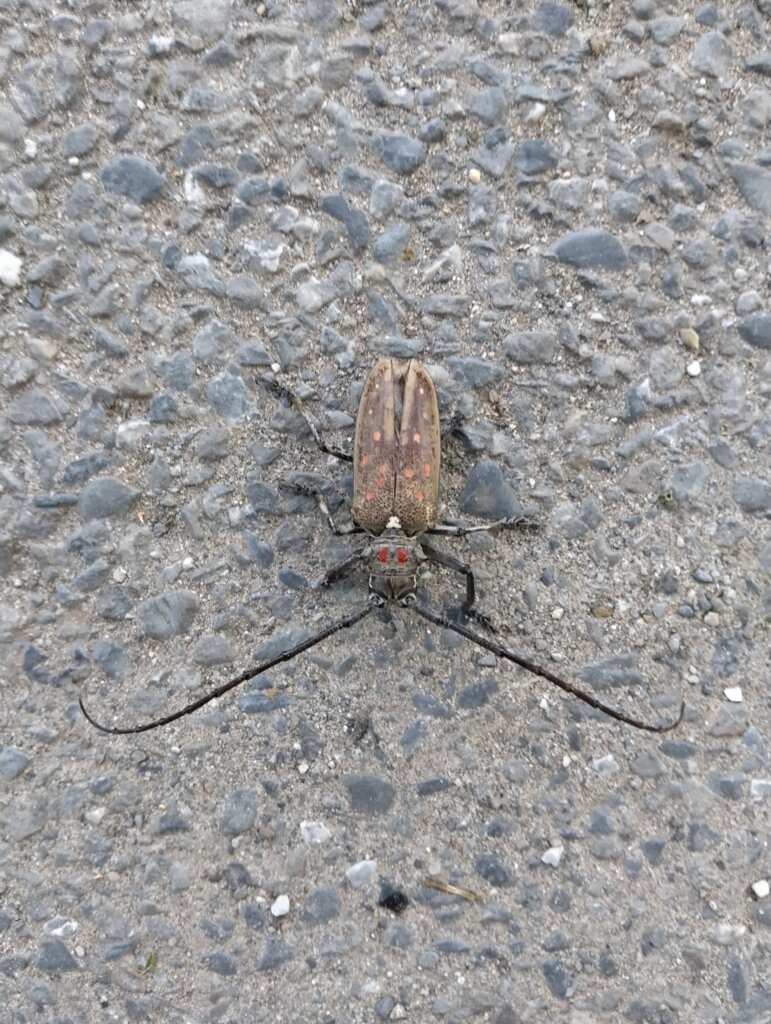
Most common longhorn beetles:
- Mango Stem Borer
- Cocoa Branch Borer
- Lebbek Borer
- Cerosterna scabrator
- Coptops aedificator
- Teak Trunk Borer
- Bamboo Tiger Longhorn
There are at least 1536 species of longhorn beetles documented in India. The family of longhorn beetles is a very large one.
6 Ground Beetles (Family Carabidae)
Approximately 15,088 species of Ground Beetles (Family Carabidae) have been recorded in India. This family is one of the most diverse within the beetle order. Their body shapes and colouring are very diverse, most are shiny black or metallic and have ridged wing covers.
- Six-spot Ground Beetle
- Craspedophorus mandarinus
- Pheropsophus jessoensis
Ground beetles play a major role in reducing weeds and insect pests in agricultural fields. Generally, ground beetles are considered opportunistic feeders who primarily find their food in a random search, although some species hunt using sight or through the use of special hair-like appendages on their antennae. They feed on a wide range of pests, including aphids, moth larvae, beetle larvae, mites, and more. A few specialists feed on snails using specially adapted mouthparts.
7. Jewel Beetles (Family Buprestidae)
There are around 15,088 species of beetles in India, including those belonging to the Buprestidae family, commonly known as jewel beetles. These beetles are generally cylindrical or long in shape. These beetles come in a variety of bright colours and complicated patterns. The iridescence (that metallic holographic colour) is common to these beetles is not because of colour pigments in their body, but instead is caused by structural colouration, in which microscopic texture in their body selectively reflects specific frequencies of light in particular directions. This is the same effect that makes a compact disc reflect multiple colours.
- Sternocera chrysis
- Spiral Borer
- Lampetis fastuosa
- Chrysochroa rajah
- Belionota prasina
The larvae bore through roots, logs, stems, and leaves of various types of plants, ranging from trees to grasses. The wood boring types generally favour dying or dead branches on otherwise-healthy trees, while a few types attack green wood. Some of these are serious pests capable of killing trees and causing major economic damage, such as the invasive emerald ash borer. Some species are attracted to recently burned forests to lay their eggs. They can sense pine wood smoke from up to 80km away, and can see infrared light.
8. Fireflies (Family Lampyridae)
The Lampridae family of beetles with more than 70 species of fireflies in India. These beetles are light-emitting. They are soft-bodied beetles commonly called fireflies, lightning bugs, or glowworms for their conspicuous production of light, mainly during twilight, to attract mates.
Light production in the Fireflies is thought to have originated as a warning signal that the larvae were distasteful. This ability to create light was then used as a mating signal. They later take advantage of this ability, for example, Adult female fireflies of the genus Photuris mimic the flash pattern of the Photinus beetle to trap their males as prey.
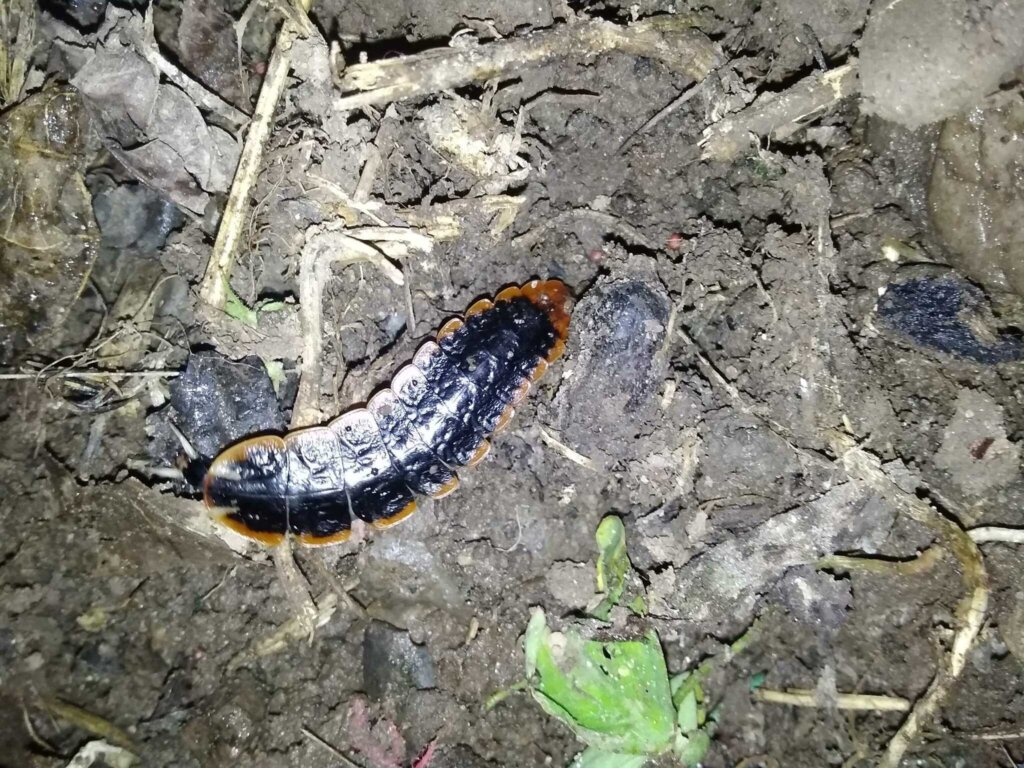
Fireflies are found in temperate and tropical climates. Many live in marshes or in wet, wooded areas where their larvae have abundant sources of food. Although all fireflies normally glow as larvae, only some species produce light in their adult stage, and the location of the light organ varies among species and between sexes of the same species. Fireflies have attracted human attention since forever, their presence has been taken to signify a wide variety of conditions in different cultures.