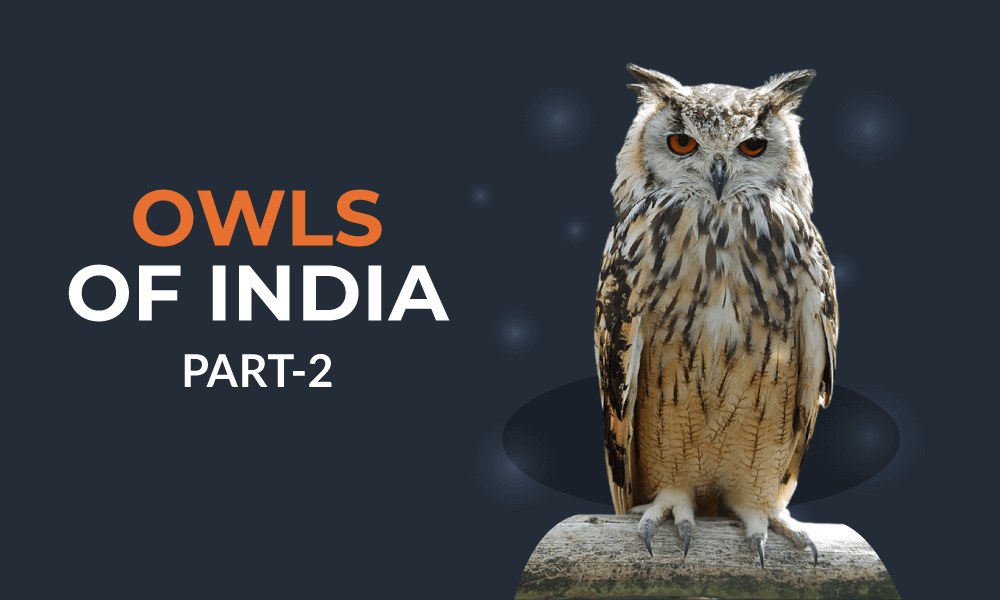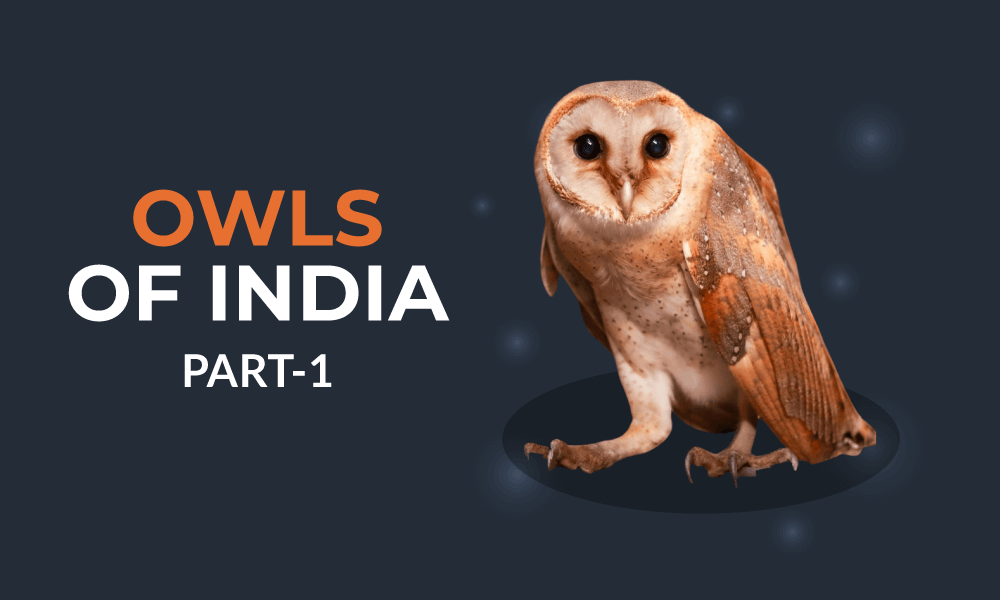
Continuous part of the post Owls of India Part-1 and Owls of India Part-2
20. Mottled wood owl (Strix ocellata)

(Strix_ocellata)_by_Shantanu_Kuveskar.jpg
These owls prefer dry areas and can also be found in cities.
21. Brown Wood owl (Strix leptogrammica)

They are very similar to the Mottled wood owl, but they prefer to live in more moist and wet regions of India. Found in north-east India, the western and eastern ghats.
22. Himalayan Wood Owl (Strix nivicolum)

These owl is found in the Himalayan region of India, like Himachal, Uttarakhand, Sikkim and Manipur. Lives in the forest of pine and oak. Prefer the altitude of more than 1500m.
This is one of the owls that can survive in the snow.
23. Collared Owlet (Glaucidium brodiei)

These are the smallest owls of India. These are diurnal (active during the day) and found in the forest of Oak, Rhododendron and deodar.
24. Asian Barred Owlet (Glaucidium cuculoides)

Found all over where our collared owlet is found. They are also diurnal (active during the day) and crepuscular(active during twilight, hunting primarily at dawn and dusk) They mostly feed on insects, small birds and rodents.
25. Jungle Owlet (Glaucidium radiatum)

These are one of the most common owls of India, found all over India except the higher Himalayas. As the name suggests, they prefer to live in a wooded area with dense tree cover.
They mainly feed on insects, but their favourite insect is beetles. Out of their diet, more than 80% is beetles.
They are also diurnal (active during the day) and crepuscular(active during twilight, hunting primarily at dawn and dusk)
26. Spotted Owlet (Athene brama)

These are one of the widely distributed species found in India. Mostly found around human settlements, urban and rural areas, near crop fields, and farmlands.
27. Little Owl (Athene noctua)

These are found in the mountain region of India at a height of 3000-4000m. They are found in rocky areas and can also be seen around human populations. As a small owl, they primarily feed on insects and small rodents.
28. Forest Owlet (Heteroglaux blewitti)

blewitti_by_Ashahar_alias_Krishna_Khan.jpeg
These owls were known to be found only in the Satpuda range, but later researchers found that it can also be found in the Western Ghats. They prefer dry deciduous forests, feed mainly on rodents, reptiles, small birds and insects.
They are also diurnal (active during the day) and crepuscular(active during twilight, hunting primarily at dawn and dusk)
29. Boreal Owl (Aegolius funereus)

Very, very rare owl of India. Was seen in Himachal Pradesh
30. Brown Hawk Owl (Ninox scutulata)

At first glance, this looks more like a Hawk because of its beak. That is why it’s called a Hawk Owl, they are found throughout all of India’s forest areas.
They prefer the areas around the running water stream, mainly feed on small insects, birds and shockingly also feed on bats.
These owls are also called the bat killers. They hunt small bats in the mid-air. Hence, they got their nickname of “The bat killer”.
31. Andman Hawk Owl (Ninox affinis)
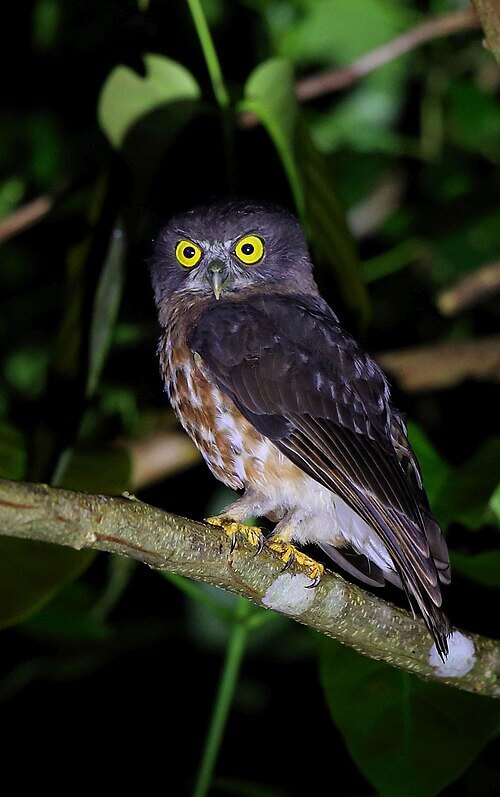
Another species of Hawk owl, only found on the Andaman Islands.
32. Hume’s Hawk Owl (Ninox obscura)
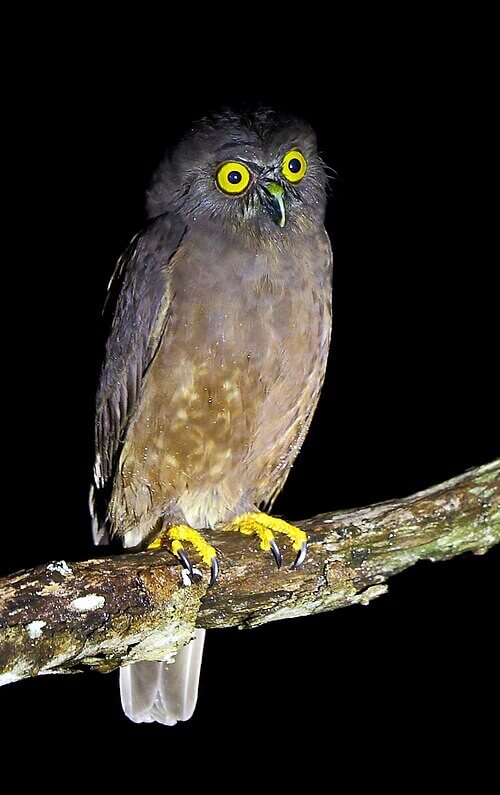
They are found on the Andaman and Nicobar Islands. They also feed on bats and swift birds. They live near the entrance of the caves and nests of swift birds, and when the bats and swifts come out of their home, the owls hunt them.
33. Short-eared Owl (Asio flammeus)

This is a migratory owl, which visits India during the winter season. They can be seen in central India. These owls are very territorial and protect their territory very aggressively. These owls are mostly found in open grasslands.
34. Long-eared Owl (Asio Otus)

This is also a migratory owl, they visit India during the winter season and can be seen in the northern part of the country. These owls are also mostly found in open grasslands.
Information credit: Dr Girish Jathar, Ornithologist
Youtube link: https://www.youtube.com/watch?v=B4zOPAPYGro
This is part 3 of the whole list, the first parts are below…